Why Qualification Scores Don't Measure Defensive Readiness
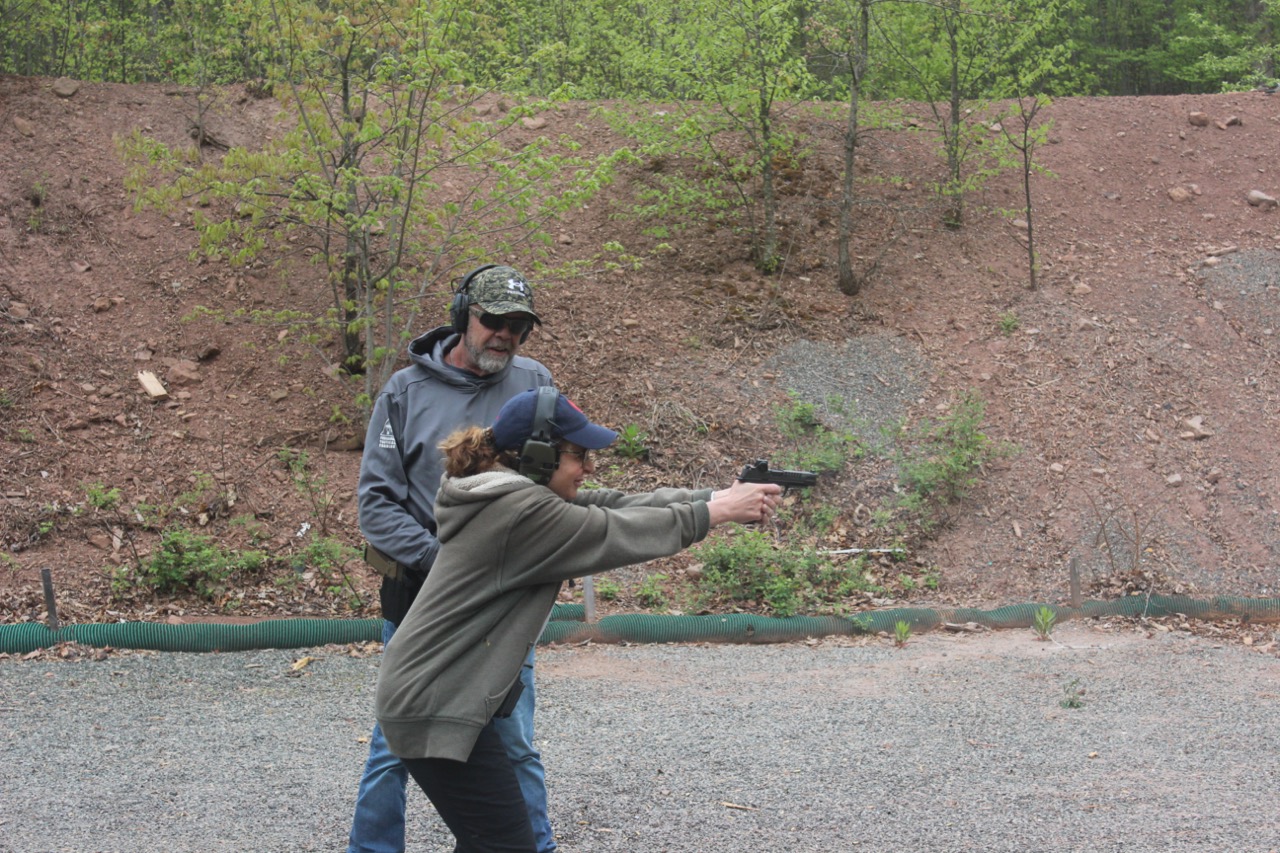
Student working on advanced skills with Jim Benoit
Passing a Shooting Qualification Doesn't Mean You're Prepared for a Defensive Encounter
For many gun owners, the first formal milestone in their firearms journey is passing a qualification.
You stand on the firing line.
The instructor gives you commands.
You shoot a prescribed number of rounds at a target.
The score is calculated.
You pass.
Congratulations.
But here's the question many gun owners never ask:
What exactly did you qualify for?
A shooting qualification can be useful. It can establish a minimum standard of competency and demonstrate that a shooter can safely operate a firearm and hit a target under a specific set of conditions.
But passing a qualification does not necessarily mean you are prepared for a real defensive encounter.
There is a significant difference between qualifying with a firearm and being prepared to defend yourself with one.
What Does a Shooting Qualification Actually Measure?
A qualification course is designed to measure performance against a predetermined standard.
Depending on the course, it may evaluate:
- Accuracy
- Safe firearm handling
- Basic manipulation skills
- Shooting at various distances
- Reloading
- Time limits
These are valuable skills.
The problem occurs when shooters assume that success on a qualification automatically translates into defensive readiness.
It doesn't.
A qualification tells you how you performed during that particular test.
It doesn't necessarily tell you how you'll perform when:
- You are surprised
- You are moving
- You are under extreme stress
- You don't know where the threat is coming from
- There are innocent people nearby
- You have to make a decision before you shoot
- The environment is unfamiliar
- You are physically exhausted
- You are injured
Those are entirely different problems.
Passing Doesn't Mean You Can Make Good Decisions
One of the most important skills in a defensive encounter is decision-making.
Yet most traditional qualification courses don't measure it.
You are typically told:
"Load and make ready."
Then:
"On the command, fire."
There is no ambiguity.
You know exactly what is expected.
You know where the targets are.
You know when the shooting will begin.
You know the target is supposed to be engaged.
Real defensive encounters don't provide those advantages.
The most important decision may be whether you should shoot at all.
That is a very different skill.
Defensive Readiness Starts Before the Gun Comes Out
A defensive encounter is not a shooting problem that begins when you draw your firearm.
It starts much earlier.
It may begin with recognizing that something isn't right.
It may involve identifying a potential threat.
It may require creating distance.
It may involve leaving the area.
It may require verbal communication.
It may require protecting another person.
The firearm is only one tool in a much larger defensive process.
This is why situational awareness and decision-making are so important.
Our article What Skills Matter Most in a Defensive Encounter? explores the broader skill set required for real-world defensive preparedness.
Accuracy Is Important—But Accuracy Alone Isn't Enough
Let's be clear.
Accuracy matters.
You should be able to place effective hits when required.
But defensive shooting is not a bullseye competition.
The goal isn't to shoot the smallest group possible.
The goal is to make effective hits while managing everything else happening around you.
You may need to:
- Move
- Communicate
- Identify a threat
- Process information
- Manage your environment
- Protect another person
- Respond to changing circumstances
A qualification score tells you how accurately you shot under qualification conditions.
It doesn't tell you how effectively you can integrate all of those skills.
The Problem With Static Shooting
Most qualification courses are conducted from a relatively stable position.
Stand here.
Face the target.
Draw or present.
Fire.
Reload.
Fire again.
This is useful for evaluating fundamental shooting ability.
But defensive encounters are rarely so cooperative.
You may be:
- Moving
- Turning
- Taking cover
- Working around obstacles
- Seated
- On the ground
- In an awkward position
The ability to shoot accurately from a comfortable standing position is a foundation.
It is not the finished product.
Real Defensive Encounters Require Problem-Solving
A qualification gives you a problem with a known answer.
A defensive encounter gives you a problem you may not fully understand.
That distinction is enormous.
You may have to determine:
Is that person actually a threat?
Do I need to act?
Where are the innocent people?
Can I safely move?
Is there cover?
What happens if the situation changes?
These decisions cannot be measured by a paper target alone.
This is one reason progressive defensive training is so important.
Our Defensive Carry Series is designed to progressively introduce more complex problems rather than treating defensive firearms training as a single qualification event.
Stress Changes Everything
You can perform exceptionally well during a qualification and still struggle under real stress.
This isn't necessarily because you lack ability.
It's because stress changes how humans perform.
Under extreme stress, you may experience:
- Elevated heart rate
- Tunnel vision
- Auditory exclusion
- Reduced fine motor control
- Difficulty processing information
- Distorted perception of time
The solution isn't to eliminate stress.
That's impossible.
The goal is to learn how to function despite it.
That requires training that progressively introduces pressure, uncertainty, and decision-making.
The Timer Can Be Helpful—But It Isn't the Mission
Timers have a valuable place in firearms training.
They provide objective data.
They can identify inefficiencies.
They can help measure improvement.
But the timer can also become a trap.
When shooters become obsessed with beating the clock, they may begin sacrificing the very things that matter most in a defensive encounter.
They may:
- Rush their decisions
- Sacrifice accuracy
- Ignore their surroundings
- Focus exclusively on the target
- Treat every problem like a race
Fast isn't always better.
Correct is better.
Speed should be developed as a byproduct of efficient technique and good decision-making—not as the primary objective.
The Best Defensive Training Isn't Always the Most Exciting
There is a temptation in the firearms industry to chase increasingly complex drills.
More movement.
More targets.
More speed.
More equipment.
More difficulty.
But complexity isn't automatically realism.
The best training builds skills progressively.
Students should first learn fundamental skills.
Then they should learn to apply those skills under increasing levels of difficulty.
This is similar to our approach to the Defensive Carry progression, where students build from foundational skills toward increasingly complex defensive problems.
A Qualification Is a Snapshot—Training Is a Process
Think of a qualification as a snapshot.
It tells you how you performed at a specific moment.
Training tells you how you are developing over time.
A qualification can answer:
"Can you meet this standard today?"
Training should answer:
"Are you becoming more capable?"
Those are two very different questions.
The best shooters don't stop training because they passed a qualification.
They use standards to identify weaknesses and continue improving.
If you've ever wondered why some gun owners stop improving after their first class, read Why Most Gun Owners Plateau After Their First Training Class.
The Danger of False Confidence
Perhaps the biggest problem with relying too heavily on qualification scores is false confidence.
A passing score can create the impression that you're ready.
But defensive readiness is not a certificate.
It is a capability.
You should be able to honestly evaluate:
- Can I safely carry my firearm?
- Can I access it efficiently?
- Can I make good decisions under stress?
- Can I recognize when not to shoot?
- Can I move and communicate?
- Can I operate if something goes wrong?
- Can I continue functioning when conditions aren't ideal?
Those are much harder questions than:
"Did I pass?"
How Often Should You Train?
Passing a qualification is not the end of your training.
It should be the beginning of a continuing process.
Skills deteriorate when they aren't maintained.
If you carry a firearm for personal protection, you should have a plan for maintaining your skills through a combination of dry fire, live fire, and periodic professional instruction.
Our article How Often Should You Train With Your Carry Gun? provides a practical framework for building that routine.
What Should You Measure Instead?
Qualification scores aren't useless.
They simply shouldn't be the only measurement of readiness.
Consider tracking:
Accuracy
Can you consistently make effective hits?
Speed
Can you perform necessary tasks efficiently without sacrificing accuracy or judgment?
Consistency
Can you perform reliably from one session to the next?
Decision-Making
Can you correctly identify when action is and isn't necessary?
Movement
Can you maintain control and awareness while moving?
Problem-Solving
Can you adapt when something goes wrong?
Stress Performance
Can you continue functioning when conditions become difficult?
These measurements provide a much more complete picture of defensive capability.
Final Thoughts
Passing a qualification is an accomplishment.
It demonstrates that you met a particular standard under a particular set of conditions.
That's valuable.
But don't confuse qualification with preparedness.
A real defensive encounter won't announce itself.
You won't know exactly when it will happen.
You won't know where the threat will appear.
You won't know whether you will be standing still.
You won't know whether you will be injured.
And you certainly won't be handed a target and told when to shoot.
Defensive readiness requires more.
It requires awareness.
Judgment.
Decision-making.
Movement.
Marksmanship.
Equipment familiarity.
And the ability to continue functioning when everything goes wrong.
At Cajun Arms, we believe a qualification should be viewed as a baseline—not a finish line. Our goal is to help armed citizens develop practical defensive skills that extend beyond simply passing a test.
Don't train just to qualify. Train to be capable.
- What Makes Defensive Firearms Training Different From Regular Range Training?
- How to Build a Personal Defensive Training Plan
- Why Qualification Scores Don't Measure Defensive Readiness
- The Hidden Costs of Cheap Firearms Training
- What Experienced Concealed Carriers Wish They Knew Earlier
- What Skills Matter Most in a Defensive Encounter?
- How Often Should You Train With Your Carry Gun?
- Why Most Gun Owners Plateau After Their First Training Class
- Why Serious Shooters Across Pennsylvania Train With Cajun Arms
- Why Training Matters More Than Gear