What Skills Matter Most in a Defensive Encounter?
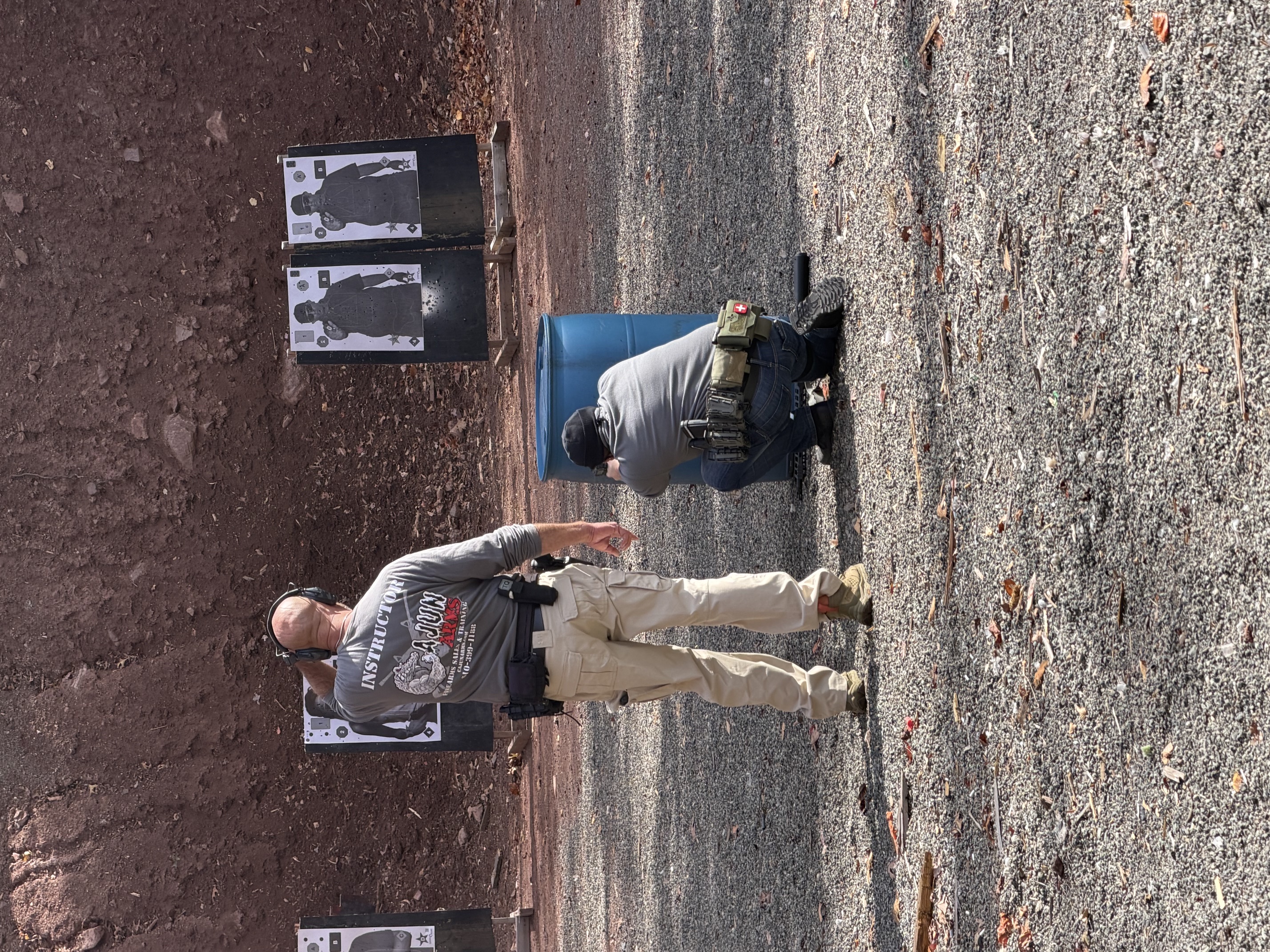
Raising the students skillset in Cajun Arms class
Ask a group of gun owners what skill matters most in a defensive encounter, and many will immediately answer:
"Accuracy."
While marksmanship is certainly important, it may surprise you to learn that hitting the target is only one piece of a much larger puzzle.
In the real world, defensive encounters are dynamic, chaotic, and often unpredictable. Success depends on far more than your ability to shoot tight groups at the range.
The armed citizen who prevails is often not the fastest shooter or the most accurate shooter—but the one who can make sound decisions, remain composed under pressure, and apply the right skills at the right time.
So what skills actually matter most?
Let's take a closer look.
Situational Awareness: The Skill That Prevents Fights
If there is one skill that deserves the top spot, it's situational awareness.
The best defensive gunfight is the one that never happens.
Being aware of your surroundings allows you to identify potential problems before they become immediate threats. It gives you opportunities to avoid danger, create distance, seek cover, or simply leave the area before a confrontation develops.
Many defensive encounters are preceded by warning signs:
- Suspicious behavior
- Unusual movement
- Individuals closing distance rapidly
- Environmental cues that something isn't right
Unfortunately, many people spend their time distracted by phones, headphones, or other distractions that reduce awareness.
The earlier you recognize a problem, the more options you have.
Decision-Making Under Stress
Most people spend far more time practicing shooting than they do practicing decision-making.
Yet defensive encounters are ultimately decision-making problems.
Questions that may arise include:
- Is this actually a threat?
- Can I safely disengage?
- Is deadly force justified?
- Are there innocent people nearby?
- Should I move?
- Should I seek cover?
- Is drawing my firearm the appropriate response?
These decisions often must be made in seconds or less.
The ability to think clearly under pressure may be more important than any technical shooting skill.
This is one reason our Defensive Carry 2 and Defensive Carry 3 courses place students in increasingly demanding situations that require problem-solving rather than simply shooting on command.
Accessing the Firearm Efficiently
Many shooters focus heavily on shooting but spend very little time practicing the draw.
In reality, a defensive firearm provides no value if it cannot be accessed quickly and safely when needed.
Drawing from concealment involves:
- Clearing garments efficiently
- Establishing a proper grip
- Presenting the firearm consistently
- Maintaining muzzle discipline
- Acquiring sights quickly
Even highly accurate shooters can struggle if they have never practiced accessing the firearm under realistic conditions.
This is a core focus of our Defensive Carry 1 curriculum because firearm access is one of the foundational defensive skills every armed citizen must develop.
Communication
Communication is one of the most overlooked defensive skills.
Not every confrontation requires a firearm.
In many situations, verbal skills can help de-escalate conflict, establish boundaries, or create opportunities to disengage safely.
Simple commands such as:
- "Stop."
- "Stay back."
- "Leave me alone."
Can serve multiple purposes.
They may deter an aggressor, attract witnesses, clarify intent, and help establish your actions if the event is later scrutinized.
Your voice can be an important defensive tool.
Movement
Many range drills involve standing perfectly still while engaging stationary targets.
Real life rarely works that way.
Movement can help:
- Create distance
- Improve positioning
- Access cover
- Escape danger
- Disrupt an attacker's plan
Being able to move efficiently while maintaining awareness and firearm control is an important component of defensive preparedness.
Unfortunately, it is also one of the least-practiced skills among average gun owners.
Marksmanship Still Matters
At this point, some readers may wonder if marksmanship is being minimized.
Not at all.
You must be capable of placing accurate hits under stress.
The difference is that marksmanship is only one component of a complete defensive skill set.
The ability to shoot accurately becomes far more valuable when combined with awareness, decision-making, movement, and efficient firearm access.
A shooter who can produce one-inch groups on the range but struggles to recognize a threat may be less prepared than someone with average shooting ability and exceptional awareness.
Accuracy matters.
It simply isn't the only thing that matters.
Emotional Control
Fear, adrenaline, and stress affect everyone.
Under extreme stress, people commonly experience:
- Tunnel vision
- Auditory exclusion
- Loss of fine motor skills
- Elevated heart rate
- Difficulty processing information
Training cannot eliminate these physiological responses.
What it can do is help individuals learn to function despite them.
The more realistic and challenging your training becomes, the more comfortable you become operating under pressure.
This is one reason many shooters continue their education beyond introductory courses.
If you've ever wondered why some shooters stop improving, our article Why Most Gun Owners Plateau After Their First Training Class explores how growth often stalls when students stop seeking new challenges.
Continuous Learning
Defensive preparedness is not a destination.
It is a process.
The most capable armed citizens are typically those who:
- Train consistently
- Seek quality instruction
- Practice deliberately
- Evaluate their weaknesses
- Remain open to learning
If you're wondering how often you should be working on these skills, be sure to read our article How Often Should You Train With Your Carry Gun?
So What Skill Matters Most?
The honest answer is that no single skill stands alone.
Defensive encounters require a combination of:
- Situational awareness
- Decision-making
- Firearm access
- Communication
- Movement
- Marksmanship
- Emotional control
Weakness in any one area can create problems.
The goal of defensive training is not to become an expert in one skill while neglecting the others.
The goal is to build a well-rounded capability that allows you to avoid danger when possible and respond effectively when necessary.
Final Thoughts
Many gun owners spend years chasing faster splits, smaller groups, and higher qualification scores.
While those accomplishments can be valuable, they do not tell the entire story.
Defensive readiness is about much more than shooting.
It is about awareness, judgment, decision-making, communication, movement, and the ability to perform under stress.
At Cajun Arms, our training philosophy focuses on developing complete armed citizens—not just better shooters. Whether you're starting with Defensive Carry 1 or continuing through our advanced courses, the objective remains the same: building practical skills that matter in the real world, not just on the range.
- How to Build a Personal Defensive Training Plan
- Why Qualification Scores Don't Measure Defensive Readiness
- The Hidden Costs of Cheap Firearms Training
- What Experienced Concealed Carriers Wish They Knew Earlier
- What Skills Matter Most in a Defensive Encounter?
- How Often Should You Train With Your Carry Gun?
- Why Most Gun Owners Plateau After Their First Training Class
- Why Serious Shooters Across Pennsylvania Train With Cajun Arms
- Why Training Matters More Than Gear
- Mistakes Intermediate Shooters Still Make
- Dry Fire Training: What Actually Works vs. What’s a Waste of Time
- Top 10 Mistakes New Concealed Carriers Make (And How to Avoid Them)
- Why Are You Just Standing There? Shooting From Unconventional Positions
- You Get What You Pay For: Why Quality Firearms Training Matters
- How to Choose a Firearms Training Class in Pennsylvania (2026 Guide)
- Teaching Your Child Gun Safety: A Parent's Complete Guide
- AR15 for Home Defense: Choosing the Right Gun for the Job
- Understanding Self-Defense Laws and Concealed Carry in Pennsylvania: A Comprehensive Overview
- Low-Light Defensive Shooting: Techniques You Won’t Learn on the Square Range
- Defensive Mindset: How to Stay Calm and Think Under Stress
- Why De-Escalation Training Completes a Well-Rounded Defensive Education
- Self Defense Training for Your Family in Uncertain Times
- How Often Should You Train With Your Concealed Carry Firearm?
- Where to Sell Used Firearms: Why Cajun Arms is Your Premier PA Choice
- Why Training Outdoors in Winter Matters More Than You Think
- Why Most Gun Owners Fail Under Stress — And How Stress-Inoculation Training Fixes It
- Avoidance and Awareness: Your First Line of Self-Defense
- Mental Preparation for Defensive Shooting Class
- Mental Preparation for Defensive Shooting: The Missing Link for CCW Holders
- 2025/26 Trends in CCW & Concealed Carry: What Every Responsible Gun Owner Should Know
- Mastering Speed and Precision in Defensive Pistol Training: A Complete Guide
- Why Small Unit Tactics (SUT) Don’t Work for Civilians — And What Does: A Cajun Arms Guide
- What to Expect in a Defensive Pistol Class
- Essential AR15 Maintenance Tips for Maximum Reliability and Long Service Life
- Bad Guys Come Out in the Heat
- Looking for “Firearms Training Near Me”? Here’s What to Expect—and How to Choose the Right Instructor
- Speed vs. Precision: What Matters Most in a Defensive Shooting?
- Dynamic Movement & Shooting: Train Like You Fight
- Firearms Training and Home Defense
- From Basics to Advanced: Tactical Shooting Courses at Cajun Arms
- Firearms Training Near Me - Cajun Arms West Chester, PA
- Master Your AR-15 with Expert Training at Cajun Arms
- Defensive Pistol Training for Self-Defense — Cajun Arms
- Choose the Best Home Defense Firearm — Cajun Arms Guidance
- Becoming a Firearms Instructor: The Path to Excellence
- Empowerment Through Precision: Elevating Your Self-Defense Firearm Skills
- Training Scars: Breaking Free From Flat-Range Habits
- Vehicle Defense
- WATCH WHAT YOU FEED YOUR GUN
- CAN YOU BE ACCOUNTABLE FOR YOUR SPEED?
- Training with Micro-Compacts
- A Follow Up to the “Hardest Shooting Fundamental”
- So You Want To Go Fast?
- The Hardest Shooting Fundamental: Mastering Follow-Through
- New Gun, New Habits
- Home Defense Shotgun Set Up
- What Should I be Doing at the Range?
- Fighting From The Ground
- Take Charge of Recoil, don’t let it control you…
- Think Before You Speak
- Grab a Partner
- The Risks of Being Nice
- Lead With Your Eyes (not your muzzle)
- Train as You Carry… Leave the competition and tactical gear behind
- KNIFE VS GUN - A quick scenario to ponder
- Frankengun vs. Factory: Choosing a Reliable AR for Self-Defense
- Program Your Brain: Why Perfect Practice Beats Fast Practice
- What If You're Injured During a Defensive Encounter?
- Lights and Lasers and YouTube Ninjas
- Our Stance on Your Stance
- Training for More Than One Attacker…
- Keep Your Head On - Consistency
- Defensive Shotgun Accessories: What You Need—and What You Don't
- Charlottesville - lies and hypocrites
- Keep Your Finger Off the Trigger…
- …and Re-holster
- Unauthorized persons…
- Focus on What will Save Your Life
- Train for Success with your Firearms
- Every Day is a Good Day to Be Ready
- Appendix Carry - Is it right for you?
- Learn to See the Light: Low-Light Firearms Training You Can Use
- Anti-Gun Sentiment on the Internet: How It Affects Lawful Firearms Owners
- Point Shooting: Does it work?
- About your self-defense carry ammo...
- See the Whole Picture... Know how to reload reflexively
- One-Handed Shooting
- Every Bullet Has a Price
- On Magazine Changes... fighting for your life
- There is Such a Thing as Too Fast...
- A Threat at Arm's Length
- In Defensive Shooting, Missing Your Target Has Consequences...
- Operating out of your Comfort Zone...
- Every Bullet Has A Price - Operational Speed
- Car and Truck Gun Safety: Protect Yourself Responsibly
- Keep a Clear Head
- Get Training!
- Women and Firearms at Cajun Arms