The Hidden Costs of Cheap Firearms Training
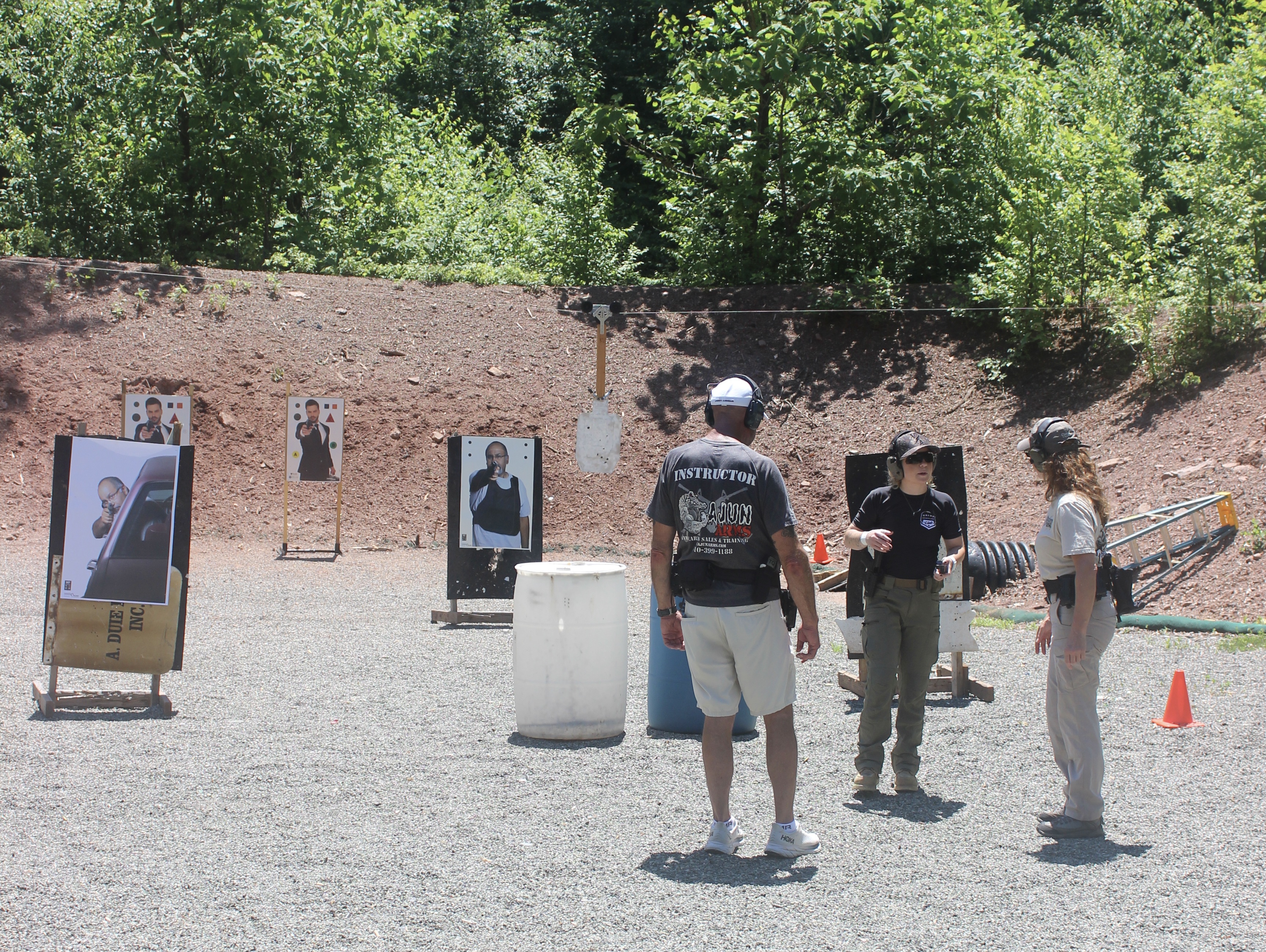
Student receiving feedback after a difficult drill at Cajun Arms
Why the Lowest Price May End Up Costing You More
Everyone likes a good deal.
There is nothing wrong with saving money.
But there are certain purchases where the lowest price can become surprisingly expensive.
Firearms training is one of them.
At first glance, a low-cost class may seem like an easy decision.
If one course costs $75 and another costs $250, the cheaper option appears to offer more value.
But firearms training is not a commodity.
You are not buying rounds of ammunition or paper targets.
You are investing in knowledge, judgment, habits, and skills that may someday influence life-changing decisions.
The real question isn't:
"How much does the class cost?"
It's:
"What am I actually getting?"
Cheap Training Can Create Expensive Habits
One of the biggest hidden costs of poor instruction is learning the wrong things.
Most students cannot immediately tell whether they are receiving good information.
Beginners especially lack the experience to identify ineffective techniques or questionable advice.
Unfortunately, poor habits can become deeply ingrained.
Improper grip.
Unsafe gun handling.
Inefficient movement.
Bad reload mechanics.
Incorrect presentation.
Weak decision-making.
Once those habits are programmed, they can take significant time and effort to undo.
And in some cases, students spend more money correcting poor training than they would have spent doing it right the first time.
Not All Certifications Mean Equal Instruction
Many shooters evaluate instructors based entirely on certifications.
Certifications matter.
But certifications alone do not guarantee teaching ability.
A great instructor does more than demonstrate skill.
They:
- Communicate clearly
- Diagnose problems
- Adapt to students
- Explain the why behind techniques
- Build skills progressively
- Create safe learning environments
The ability to perform and the ability to teach are not always the same skill.
When evaluating training, ask:
- Is there a curriculum?
- Is there progression?
- Are standards explained?
- Is there feedback?
- Is safety emphasized?
- Are students challenged appropriately?
These questions often reveal more than price.
Cheap Classes Often Focus on Information Instead of Performance
Many low-cost classes become information dumps.
Students spend hours listening.
Very little time is spent performing.
Students leave feeling knowledgeable but unable to apply what they learned.
Quality defensive training should create measurable improvement.
Students should leave with:
- Better gun handling
- Improved decision-making
- Increased confidence
- Clear practice objectives
- Identified weaknesses
Training should change behavior—not just transfer information.
The Hidden Expense of Starting Over
One of the most common things experienced instructors hear is:
"I wish I had started with professional training."
Many students spend years trying to fix problems that could have been avoided with quality instruction from the beginning.
Consider the hidden costs:
- Buying unnecessary equipment
- Developing poor habits
- Lost practice time
- Reduced confidence
- Relearning fundamentals
In reality, cheap training often becomes expensive training.
If you've read our article Program Your Brain: Why Perfect Practice Beats Fast Practice, you've already seen why repeated mistakes become permanent habits.
Beware of Entertainment Disguised as Training
This may be uncomfortable to hear.
Not every class exists to make students better.
Some exist primarily to entertain.
High round counts.
Fancy drills.
Speed demonstrations.
Social media moments.
Students often leave feeling accomplished.
But ask yourself:
What measurable skill improved?
Training should not just feel productive.
It should be productive.
You should leave knowing:
- What improved
- What still needs work
- What to practice next
More Equipment Rarely Solves Training Problems
Another hidden cost of poor training is chasing equipment.
Students often believe the answer is:
- Better trigger
- Better sights
- Better optic
- Better holster
- Better compensator
The truth is uncomfortable.
Most performance problems are software issues.
Not hardware issues.
Good instructors identify the root cause.
They don't prescribe expensive upgrades to solve training deficiencies.
If you've read What Experienced Concealed Carriers Wish They Knew Earlier, you've already seen how experienced carriers eventually learn that gear matters far less than capability.
Quality Training Should Create Independence
A great instructor should not create dependency.
They should build capability.
Good training gives students:
- Skills they can practice alone
- Objective standards
- Measurable goals
- Problem-solving ability
Students should leave knowing how to continue improving after class.
That's where long-term progress happens.
What to Look for in a Defensive Firearms Course
Price matters.
But it should not be the only factor.
When evaluating a class, consider:
Experience
Does the instructor have real experience teaching civilians?
Structure
Is there a clear progression?
Safety
Are standards enforced?
Student Development
Are students receiving individual feedback?
Realism
Does training solve actual defensive problems?
Continuing Education
Is there a path forward?
This is one reason our Defensive Carry Series is structured progressively rather than treating training as a one-time event.
The Most Expensive Training Is Training That Doesn't Work
A cheap class that teaches bad habits is expensive.
A free class that creates false confidence is expensive.
A low-cost class that convinces you that you no longer need training may be the most expensive of all.
Effective training should leave you feeling capable—but also aware there is more to learn.
That mindset drives continual improvement.
If you've ever wondered why improvement often stops after an initial class, read Why Most Gun Owners Plateau After Their First Training Class.
Invest in Capability
No one is suggesting every shooter needs premium gear or endless classes.
But quality instruction is one of the few investments that improves every firearm you own.
Good training makes all your equipment work better.
The opposite is rarely true.
Final Thoughts
Firearms training is not about buying an experience.
It's about building capability.
The goal isn't to find the cheapest class.
The goal is to find instruction that improves your judgment, skills, confidence, and preparedness.
At Cajun Arms, we believe training should deliver more than entertainment or qualification certificates. Students should leave safer, more capable, and with a clear path to continued growth.
Choose training the same way you choose defensive equipment:
Reliability first. Performance second. Price third.
- How to Build a Personal Defensive Training Plan
- Why Qualification Scores Don't Measure Defensive Readiness
- The Hidden Costs of Cheap Firearms Training
- What Experienced Concealed Carriers Wish They Knew Earlier
- What Skills Matter Most in a Defensive Encounter?
- How Often Should You Train With Your Carry Gun?
- Why Most Gun Owners Plateau After Their First Training Class
- Why Serious Shooters Across Pennsylvania Train With Cajun Arms
- Why Training Matters More Than Gear
- Mistakes Intermediate Shooters Still Make
- Dry Fire Training: What Actually Works vs. What’s a Waste of Time
- Top 10 Mistakes New Concealed Carriers Make (And How to Avoid Them)
- Why Are You Just Standing There? Shooting From Unconventional Positions
- You Get What You Pay For: Why Quality Firearms Training Matters
- How to Choose a Firearms Training Class in Pennsylvania (2026 Guide)
- Teaching Your Child Gun Safety: A Parent's Complete Guide
- AR15 for Home Defense: Choosing the Right Gun for the Job
- Understanding Self-Defense Laws and Concealed Carry in Pennsylvania: A Comprehensive Overview
- Low-Light Defensive Shooting: Techniques You Won’t Learn on the Square Range
- Defensive Mindset: How to Stay Calm and Think Under Stress
- Why De-Escalation Training Completes a Well-Rounded Defensive Education
- Self Defense Training for Your Family in Uncertain Times
- How Often Should You Train With Your Concealed Carry Firearm?
- Where to Sell Used Firearms: Why Cajun Arms is Your Premier PA Choice
- Why Training Outdoors in Winter Matters More Than You Think
- Why Most Gun Owners Fail Under Stress — And How Stress-Inoculation Training Fixes It
- Avoidance and Awareness: Your First Line of Self-Defense
- Mental Preparation for Defensive Shooting Class
- Mental Preparation for Defensive Shooting: The Missing Link for CCW Holders
- 2025/26 Trends in CCW & Concealed Carry: What Every Responsible Gun Owner Should Know
- Mastering Speed and Precision in Defensive Pistol Training: A Complete Guide
- Why Small Unit Tactics (SUT) Don’t Work for Civilians — And What Does: A Cajun Arms Guide
- What to Expect in a Defensive Pistol Class
- Essential AR15 Maintenance Tips for Maximum Reliability and Long Service Life
- Bad Guys Come Out in the Heat
- Looking for “Firearms Training Near Me”? Here’s What to Expect—and How to Choose the Right Instructor
- Speed vs. Precision: What Matters Most in a Defensive Shooting?
- Dynamic Movement & Shooting: Train Like You Fight
- Firearms Training and Home Defense
- From Basics to Advanced: Tactical Shooting Courses at Cajun Arms
- Firearms Training Near Me - Cajun Arms West Chester, PA
- Master Your AR-15 with Expert Training at Cajun Arms
- Defensive Pistol Training for Self-Defense — Cajun Arms
- Choose the Best Home Defense Firearm — Cajun Arms Guidance
- Becoming a Firearms Instructor: The Path to Excellence
- Empowerment Through Precision: Elevating Your Self-Defense Firearm Skills
- Training Scars: Breaking Free From Flat-Range Habits
- Vehicle Defense
- WATCH WHAT YOU FEED YOUR GUN
- CAN YOU BE ACCOUNTABLE FOR YOUR SPEED?
- Training with Micro-Compacts
- A Follow Up to the “Hardest Shooting Fundamental”
- So You Want To Go Fast?
- The Hardest Shooting Fundamental: Mastering Follow-Through
- New Gun, New Habits
- Home Defense Shotgun Set Up
- What Should I be Doing at the Range?
- Fighting From The Ground
- Take Charge of Recoil, don’t let it control you…
- Think Before You Speak
- Grab a Partner
- The Risks of Being Nice
- Lead With Your Eyes (not your muzzle)
- Train as You Carry… Leave the competition and tactical gear behind
- KNIFE VS GUN - A quick scenario to ponder
- Frankengun vs. Factory: Choosing a Reliable AR for Self-Defense
- Program Your Brain: Why Perfect Practice Beats Fast Practice
- What If You're Injured During a Defensive Encounter?
- Lights and Lasers and YouTube Ninjas
- Our Stance on Your Stance
- Training for More Than One Attacker…
- Keep Your Head On - Consistency
- Defensive Shotgun Accessories: What You Need—and What You Don't
- Charlottesville - lies and hypocrites
- Keep Your Finger Off the Trigger…
- …and Re-holster
- Unauthorized persons…
- Focus on What will Save Your Life
- Train for Success with your Firearms
- Every Day is a Good Day to Be Ready
- Appendix Carry - Is it right for you?
- Learn to See the Light: Low-Light Firearms Training You Can Use
- Anti-Gun Sentiment on the Internet: How It Affects Lawful Firearms Owners
- Point Shooting: Does it work?
- About your self-defense carry ammo...
- See the Whole Picture... Know how to reload reflexively
- One-Handed Shooting
- Every Bullet Has a Price
- On Magazine Changes... fighting for your life
- There is Such a Thing as Too Fast...
- A Threat at Arm's Length
- In Defensive Shooting, Missing Your Target Has Consequences...
- Operating out of your Comfort Zone...
- Every Bullet Has A Price - Operational Speed
- Car and Truck Gun Safety: Protect Yourself Responsibly
- Keep a Clear Head
- Get Training!
- Women and Firearms at Cajun Arms