What Experienced Concealed Carriers Wish They Knew Earlier
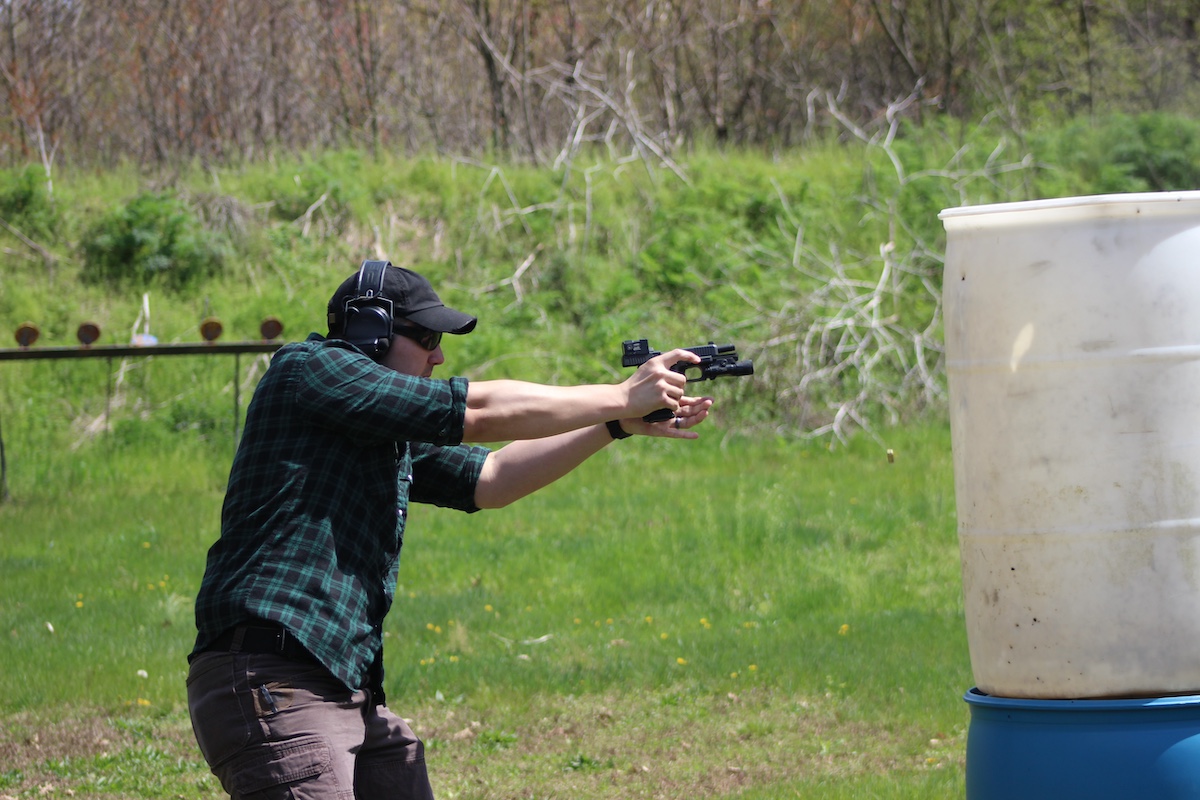
Cajun Arms concealed carry instruction
Lessons Learned From Years of Carrying a Firearm
Most concealed carriers remember the day they started carrying.
The excitement.
The responsibility.
The new holster.
The countless hours spent researching firearms, ammunition, and gear.
Many also remember believing they had most of it figured out.
Then reality set in.
After years of carrying, training, and learning, many experienced concealed carriers arrive at the same conclusion:
There were things they didn't know that they didn't know.
Some lessons come from training.
Some come from mistakes.
Some come from simply carrying a firearm every day for years.
If you're new to concealed carry, the following lessons may save you time, money, frustration, and potentially far more.
Your Gun Matters Less Than You Think
Many new concealed carriers obsess over finding the perfect firearm.
They spend countless hours comparing calibers, capacities, trigger weights, optics, and accessories.
Experienced carriers eventually learn that almost every quality defensive handgun is capable of doing the job.
The bigger question is:
Can you do yours?
The truth is that training, decision-making, and consistency matter far more than owning the latest pistol.
A reliable handgun carried consistently beats the "perfect" handgun left at home.
The Holster Is More Important Than the Gun
One of the most expensive mistakes new carriers make is buying cheap holsters.
A poor holster creates problems immediately:
- Discomfort
- Poor concealment
- Slow access
- Safety concerns
- Inconsistent draw strokes
Many experienced carriers have a box full of discarded holsters that seemed like a good idea at the time.
Quality holsters are not exciting purchases.
They are essential ones.
A comfortable, secure holster makes carrying easier, which increases the likelihood that you'll actually carry your firearm consistently.
Comfort Is Important—But Capability Matters More
At some point, most concealed carriers become obsessed with comfort.
Smaller guns.
Lighter guns.
Slimmer guns.
Pocket guns.
While comfort matters, experienced carriers eventually recognize the trade-offs.
Smaller firearms are often:
- Harder to shoot accurately
- More difficult to control
- Slower to draw
- Less forgiving under stress
The smallest gun you can carry isn't always the best defensive choice.
The best choice is often the largest firearm you can comfortably and consistently carry.
Shooting Skills Fade Faster Than You Think
Many people assume that once they become proficient with a handgun, those skills will remain indefinitely.
They don't.
Defensive skills are highly perishable.
Draw speed.
Reloads.
Target transitions.
Sight acquisition.
Decision-making.
All require maintenance.
This is why ongoing training and practice are so important.
If you're wondering how often you should be practicing, our article How Often Should You Train With Your Carry Gun? provides a practical framework for maintaining defensive skills.
Most Defensive Problems Are Not Shooting Problems
This realization surprises many gun owners.
The majority of defensive encounters are actually decision-making problems.
Situational awareness.
Recognizing danger early.
Avoiding bad locations.
Managing unknown contacts.
Creating distance.
Communicating effectively.
The firearm may never need to leave the holster.
Experienced carriers understand that awareness often solves problems before shooting becomes necessary.
This is one reason we emphasize these concepts in our Defensive Carry Series, not just marksmanship.
You Will Never Rise to the Occasion
Many people believe they will perform exceptionally when the moment arrives.
Experienced trainers know better.
You are unlikely to rise to the occasion.
You will typically default to your level of training.
The habits you build today become the actions you perform under stress.
That's why quality repetition matters.
If you've read our article Program Your Brain: Why Perfect Practice Beats Fast Practice, you've already seen how repetition programs behavior under pressure.
Gear Doesn't Solve Skill Deficiencies
Many concealed carriers spend years searching for the next upgrade.
New sights.
New trigger.
New optic.
New magazine extension.
New compensator.
The uncomfortable truth is that equipment rarely fixes training deficiencies.
Experienced shooters eventually realize that most performance problems are software issues—not hardware issues.
The solution is often practice, not another purchase.
Avoiding Trouble Is a Skill
Many people view concealed carry as a shooting skill.
In reality, it is largely a lifestyle skill.
Experienced carriers often change habits over time.
They become more aware of:
- Parking locations
- Environmental cues
- Exit routes
- Developing situations
- Potential hazards
The goal is not to seek confrontation.
The goal is to avoid it whenever possible.
Winning a defensive encounter sometimes means recognizing danger early enough to leave before anything happens.
The Legal Aftermath Is Real
New gun owners often focus exclusively on surviving the encounter.
Experienced carriers spend more time thinking about what happens afterward.
Police reports.
Witness statements.
Investigations.
Civil liability.
Financial consequences.
The defensive encounter itself may last seconds.
The aftermath can last months or years.
Understanding use-of-force laws and maintaining sound judgment are critical responsibilities of every armed citizen.
Training Is More Valuable Than Most People Realize
Perhaps the most common lesson experienced concealed carriers share is this:
"I wish I had started training sooner."
Professional instruction accelerates learning.
It exposes weaknesses.
It identifies bad habits.
It introduces new solutions.
Most importantly, it provides objective feedback that is impossible to get on your own.
Many shooters spend years practicing mistakes because nobody ever showed them a better way.
If you've ever wondered why some gun owners stop improving, our article Why Most Gun Owners Plateau After Their First Training Class explains the common traps that stall progress.
The Best Carriers Stay Students
One of the most surprising observations is that the most skilled concealed carriers rarely claim to have all the answers.
In fact, the opposite is usually true.
The more they learn, the more they realize there is still to learn.
They continue taking classes.
They continue practicing.
They continue refining their skills.
They remain students.
That mindset is often what separates capable armed citizens from everyone else.
Final Thoughts
Most experienced concealed carriers eventually realize that concealed carry is far more than carrying a gun.
It's about awareness.
Judgment.
Responsibility.
Preparation.
Continuous improvement.
The firearm is simply one part of a much larger system.
At Cajun Arms, our mission is to help students build practical, real-world defensive capability—not just shooting skills. Whether you're new to concealed carry or have been carrying for years, there is always another level of competence to pursue.
Continue Learning
- How to Build a Personal Defensive Training Plan
- Why Qualification Scores Don't Measure Defensive Readiness
- The Hidden Costs of Cheap Firearms Training
- What Experienced Concealed Carriers Wish They Knew Earlier
- What Skills Matter Most in a Defensive Encounter?
- How Often Should You Train With Your Carry Gun?
- Why Most Gun Owners Plateau After Their First Training Class
- Why Serious Shooters Across Pennsylvania Train With Cajun Arms
- Why Training Matters More Than Gear
- Mistakes Intermediate Shooters Still Make
- Dry Fire Training: What Actually Works vs. What’s a Waste of Time
- Top 10 Mistakes New Concealed Carriers Make (And How to Avoid Them)
- Why Are You Just Standing There? Shooting From Unconventional Positions
- You Get What You Pay For: Why Quality Firearms Training Matters
- How to Choose a Firearms Training Class in Pennsylvania (2026 Guide)
- Teaching Your Child Gun Safety: A Parent's Complete Guide
- AR15 for Home Defense: Choosing the Right Gun for the Job
- Understanding Self-Defense Laws and Concealed Carry in Pennsylvania: A Comprehensive Overview
- Low-Light Defensive Shooting: Techniques You Won’t Learn on the Square Range
- Defensive Mindset: How to Stay Calm and Think Under Stress
- Why De-Escalation Training Completes a Well-Rounded Defensive Education
- Self Defense Training for Your Family in Uncertain Times
- How Often Should You Train With Your Concealed Carry Firearm?
- Where to Sell Used Firearms: Why Cajun Arms is Your Premier PA Choice
- Why Training Outdoors in Winter Matters More Than You Think
- Why Most Gun Owners Fail Under Stress — And How Stress-Inoculation Training Fixes It
- Avoidance and Awareness: Your First Line of Self-Defense
- Mental Preparation for Defensive Shooting Class
- Mental Preparation for Defensive Shooting: The Missing Link for CCW Holders
- 2025/26 Trends in CCW & Concealed Carry: What Every Responsible Gun Owner Should Know
- Mastering Speed and Precision in Defensive Pistol Training: A Complete Guide
- Why Small Unit Tactics (SUT) Don’t Work for Civilians — And What Does: A Cajun Arms Guide
- What to Expect in a Defensive Pistol Class
- Essential AR15 Maintenance Tips for Maximum Reliability and Long Service Life
- Bad Guys Come Out in the Heat
- Looking for “Firearms Training Near Me”? Here’s What to Expect—and How to Choose the Right Instructor
- Speed vs. Precision: What Matters Most in a Defensive Shooting?
- Dynamic Movement & Shooting: Train Like You Fight
- Firearms Training and Home Defense
- From Basics to Advanced: Tactical Shooting Courses at Cajun Arms
- Firearms Training Near Me - Cajun Arms West Chester, PA
- Master Your AR-15 with Expert Training at Cajun Arms
- Defensive Pistol Training for Self-Defense — Cajun Arms
- Choose the Best Home Defense Firearm — Cajun Arms Guidance
- Becoming a Firearms Instructor: The Path to Excellence
- Empowerment Through Precision: Elevating Your Self-Defense Firearm Skills
- Training Scars: Breaking Free From Flat-Range Habits
- Vehicle Defense
- WATCH WHAT YOU FEED YOUR GUN
- CAN YOU BE ACCOUNTABLE FOR YOUR SPEED?
- Training with Micro-Compacts
- A Follow Up to the “Hardest Shooting Fundamental”
- So You Want To Go Fast?
- The Hardest Shooting Fundamental: Mastering Follow-Through
- New Gun, New Habits
- Home Defense Shotgun Set Up
- What Should I be Doing at the Range?
- Fighting From The Ground
- Take Charge of Recoil, don’t let it control you…
- Think Before You Speak
- Grab a Partner
- The Risks of Being Nice
- Lead With Your Eyes (not your muzzle)
- Train as You Carry… Leave the competition and tactical gear behind
- KNIFE VS GUN - A quick scenario to ponder
- Frankengun vs. Factory: Choosing a Reliable AR for Self-Defense
- Program Your Brain: Why Perfect Practice Beats Fast Practice
- What If You're Injured During a Defensive Encounter?
- Lights and Lasers and YouTube Ninjas
- Our Stance on Your Stance
- Training for More Than One Attacker…
- Keep Your Head On - Consistency
- Defensive Shotgun Accessories: What You Need—and What You Don't
- Charlottesville - lies and hypocrites
- Keep Your Finger Off the Trigger…
- …and Re-holster
- Unauthorized persons…
- Focus on What will Save Your Life
- Train for Success with your Firearms
- Every Day is a Good Day to Be Ready
- Appendix Carry - Is it right for you?
- Learn to See the Light: Low-Light Firearms Training You Can Use
- Anti-Gun Sentiment on the Internet: How It Affects Lawful Firearms Owners
- Point Shooting: Does it work?
- About your self-defense carry ammo...
- See the Whole Picture... Know how to reload reflexively
- One-Handed Shooting
- Every Bullet Has a Price
- On Magazine Changes... fighting for your life
- There is Such a Thing as Too Fast...
- A Threat at Arm's Length
- In Defensive Shooting, Missing Your Target Has Consequences...
- Operating out of your Comfort Zone...
- Every Bullet Has A Price - Operational Speed
- Car and Truck Gun Safety: Protect Yourself Responsibly
- Keep a Clear Head
- Get Training!
- Women and Firearms at Cajun Arms