How to Build a Personal Defensive Training Plan
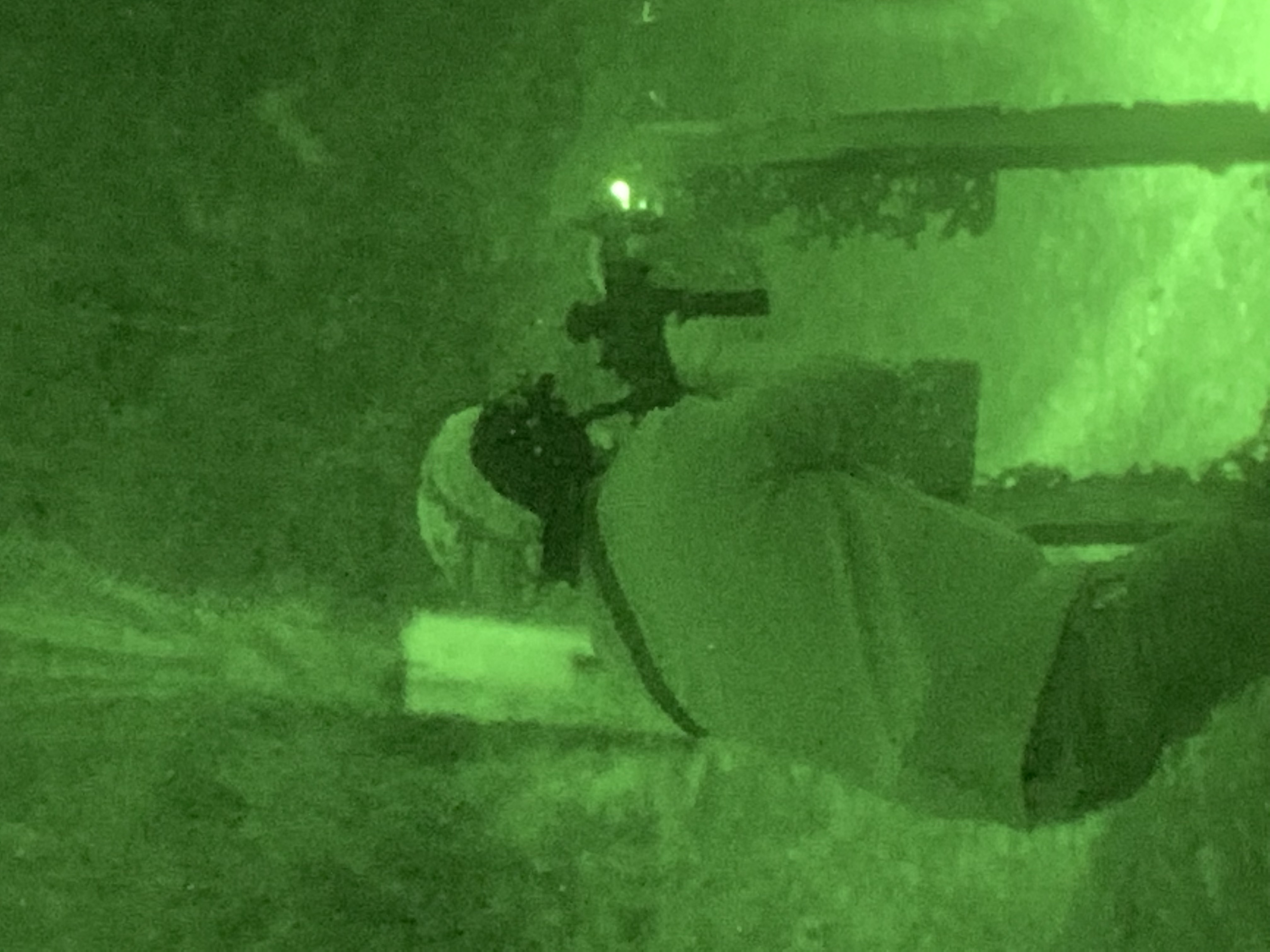
Night vision training with Cajun Arms
Stop Guessing and Start Training With a Purpose
One of the most common questions we hear from armed citizens is:
"How do I get better at defending myself with a firearm?"
It's a good question.
Unfortunately, many gun owners don't have a good answer.
They go to the range when they have time.
They shoot a few magazines.
They practice whatever drill they saw online last week.
They buy a new accessory.
Then they repeat the process.
There's nothing inherently wrong with going to the range and shooting.
But that's not the same thing as having a defensive firearms training plan.
If your goal is to become genuinely capable of protecting yourself and others, your training should be intentional, measurable, and progressive.
You don't need to train every day.
You don't need to spend thousands of dollars on ammunition.
And you don't need to become a competitive shooter.
You do need a plan.
Start With an Honest Assessment
Before creating a training plan, determine where you are right now.
Ask yourself some uncomfortable questions.
Can you safely handle your firearm without conscious thought?
Can you consistently hit what you're aiming at?
Can you draw your firearm efficiently from concealment?
Can you reload without fumbling?
Can you recognize when you should—and shouldn't—use deadly force?
Can you make decisions under pressure?
Can you operate your firearm with one hand?
Can you continue functioning if something goes wrong?
Can you identify your weaknesses?
Your answers will help determine where you should focus your training.
The goal isn't to impress yourself.
The goal is to identify gaps.
Don't Confuse Shooting With Defensive Training
This is one of the most important distinctions you can make.
Shooting is a skill.
Defensive training is a system of skills.
A trip to the range can improve your marksmanship.
But defensive preparedness requires much more.
It includes:
- Situational awareness
- Decision-making
- Communication
- De-escalation
- Firearm handling
- Marksmanship
- Movement
- Problem-solving
- Stress management
A good defensive training plan addresses all of these areas over time.
If you want to explore this topic further, our article What Skills Matter Most in a Defensive Encounter? breaks down the skills that go beyond simply hitting a target.
Build Your Training Around Three Components
A practical defensive training plan should include three primary components:
1. Dry Fire
Dry fire is where you build and reinforce fundamental movements.
2. Live Fire
Live fire confirms that your skills work with actual ammunition and recoil.
3. Professional Instruction
Professional training identifies weaknesses and introduces skills you may not develop on your own.
Each component serves a different purpose.
Remove one, and your training becomes less complete.
Start With the Fundamentals
Before worrying about advanced drills, make sure your foundation is solid.
Your initial training should include:
- Safe firearm handling
- Proper grip
- Stance and body position
- Trigger control
- Sight alignment
- Presentation from the holster
- Basic reloads
- Malfunction recognition
- Safe movement
These skills may not be glamorous.
They are essential.
A shooter who has mastered the fundamentals will have a much easier time progressing to more complex defensive problems.
If you are still developing your foundation, consider starting with a structured course such as Defensive Carry 1 rather than trying to build your entire skill set from random internet drills.
Internal Link:
/defensive-carry-1
Create a Dry-Fire Routine
Dry fire is one of the most efficient ways to improve defensive shooting skills.
It costs almost nothing.
It can be done at home.
And it allows you to perform a large number of repetitions.
A practical starting point is two to four short sessions per week.
Ten to fifteen minutes is enough.
Focus on one or two skills at a time.
For example:
Monday: Presentation from concealment
Wednesday: Reloads
Friday: Trigger control and sight acquisition
Sunday: Review and evaluation
The key is quality.
Don't rush.
Don't chase speed.
Build correct movement first.
As we discussed in Program Your Brain: Why Perfect Practice Beats Fast Practice, your brain learns what you repeatedly do—not what you intended to do.
Add Purposeful Live-Fire Practice
Live fire should not be an ammunition-burning exercise.
Every range session should have a purpose.
Before you leave for the range, decide:
What am I working on today?
Your session might focus on:
- Accuracy
- Draw speed
- Recoil management
- Multiple shots
- Reloads
- Target transitions
- Shooting at different distances
You don't need to do everything every time.
Choose one or two priorities.
Measure your performance.
Then document the results.
Don't Let the Timer Become Your Master
A shot timer can be an excellent training tool.
It provides objective feedback.
But speed should never become the sole measure of success.
The fastest possible time means nothing if your accuracy, decision-making, or safety deteriorates.
Remember:
Fast is only valuable when it is also correct.
If you're interested in how proper repetition builds reliable skills, read Why Qualification Scores Don't Measure Defensive Readiness.
Train for the Skills That Are Easy to Ignore
Most shooters naturally practice what they enjoy.
They shoot from the same position.
At the same distance.
With the same firearm.
At the same targets.
That's comfortable.
It also creates blind spots.
Your training plan should deliberately address skills you tend to avoid.
Consider practicing:
- Weak-hand shooting
- One-handed firearm manipulation
- Shooting from unconventional positions
- Low-light skills
- Movement
- Reloads
- Malfunction clearances
You may discover that the skills you least enjoy practicing are the ones you need the most.
Our article What If You're Injured During a Defensive Encounter? explores why developing one-handed and unconventional skills can be important.
Train Your Mind, Not Just Your Hands
Defensive preparedness isn't just physical.
You also need to develop your ability to think.
Ask yourself questions during training:
What if this person isn't actually a threat?
What if there are innocent people nearby?
What if I can't safely take the shot?
What if my firearm malfunctions?
What if I fall?
What if I am injured?
What if I need to protect someone else?
These questions introduce the mental component of defensive training.
Your goal isn't to predict exactly what will happen.
That's impossible.
Your goal is to become comfortable solving problems when things don't go according to plan.
Take Professional Training Regularly
No matter how much you practice on your own, there are limitations to self-directed training.
You can't always see your own mistakes.
You may not know what you don't know.
You may be practicing techniques that aren't appropriate for your goals.
Professional instruction provides:
- Objective feedback
- Structured progression
- New perspectives
- Performance standards
- Identification of weaknesses
A reasonable goal for many concealed carriers is to take at least one professional defensive firearms training course each year.
More committed students may train several times annually.
If you've been carrying for a while but haven't taken a class recently, don't assume experience automatically equals proficiency.
As we discussed in The Hidden Costs of Cheap Firearms Training, the quality of instruction matters.
Follow a Progressive Training Path
Your training should become more challenging as your skills improve.
Don't jump from beginner drills directly into complicated scenarios.
Build progressively.
For example:
Level 1: Fundamentals
- Safe handling
- Grip
- Presentation
- Trigger control
- Accuracy
Level 2: Defensive Application
- Drawing from concealment
- Movement
- Reloads
- Multiple threats
- Decision-making
Level 3: Advanced Skills
- Complex problem-solving
- Unconventional positions
- Higher levels of stress
- Dynamic movement
- More complicated scenarios
This is the philosophy behind the Cajun Arms Defensive Carry Series, which provides a progressive pathway rather than treating defensive firearms training as a one-time class.
Schedule Your Training
The best training plan is the one you actually follow.
A simple schedule might look like this:
Weekly
Two to four short dry-fire sessions.
Ten to fifteen minutes each.
Monthly
One focused live-fire session.
Choose one or two measurable objectives.
Quarterly
Review your progress.
Identify weaknesses.
Adjust your training priorities.
Annually
Complete at least one professional defensive firearms training course.
Evaluate your equipment.
Update your goals.
This approach creates consistency without requiring you to live at the range.
For more guidance, read How Often Should You Train With Your Carry Gun?
Keep a Training Journal
One of the easiest ways to improve your training is to document it.
After each session, record:
- What you practiced
- What went well
- What didn't
- What needs improvement
- What you'll work on next
This creates accountability.
It also prevents you from simply repeating the same comfortable drills every time you visit the range.
Your training journal becomes a roadmap.
Reassess Your Plan Regularly
Your training needs will change.
A new shooter may need to focus on fundamentals.
An experienced carrier may need to focus on decision-making and problem-solving.
Someone who changes their firearm may need to rebuild familiarity.
Someone who hasn't trained in six months may need to revisit basic skills.
Your plan should evolve with you.
Don't become so attached to a particular drill or technique that you stop evaluating whether it's actually helping.
The Goal Isn't to Become a Better Range Shooter
This may be the most important point of all.
Your goal isn't to win a shooting competition.
It isn't to post the fastest time on Instagram.
It isn't to shoot the smallest group on a paper target.
Those can all be worthwhile pursuits.
But defensive training has a different objective.
The goal is to become a safer, more capable, more thoughtful armed citizen who can make good decisions when circumstances become difficult.
That requires much more than shooting.
Final Thoughts
A personal defensive training plan doesn't need to be complicated.
It needs to be consistent.
Start with fundamentals.
Practice regularly.
Train with purpose.
Seek professional instruction.
Identify your weaknesses.
Progress gradually.
Then repeat the process.
The most capable armed citizens aren't necessarily the people who shoot the most rounds.
They're the people who train intentionally.
At Cajun Arms, we believe defensive readiness is a journey rather than a destination. Our goal is to help students build skills progressively, develop sound judgment, and continue improving long after they leave the range.
If you carry a firearm for personal protection, don't leave your training to chance.
Build a plan. Follow it. Measure it. Improve it.
- What Makes Defensive Firearms Training Different From Regular Range Training?
- How to Build a Personal Defensive Training Plan
- Why Qualification Scores Don't Measure Defensive Readiness
- The Hidden Costs of Cheap Firearms Training
- What Experienced Concealed Carriers Wish They Knew Earlier
- What Skills Matter Most in a Defensive Encounter?
- How Often Should You Train With Your Carry Gun?
- Why Most Gun Owners Plateau After Their First Training Class
- Why Serious Shooters Across Pennsylvania Train With Cajun Arms
- Why Training Matters More Than Gear