
How Often Should You Train With Your Carry Gun?
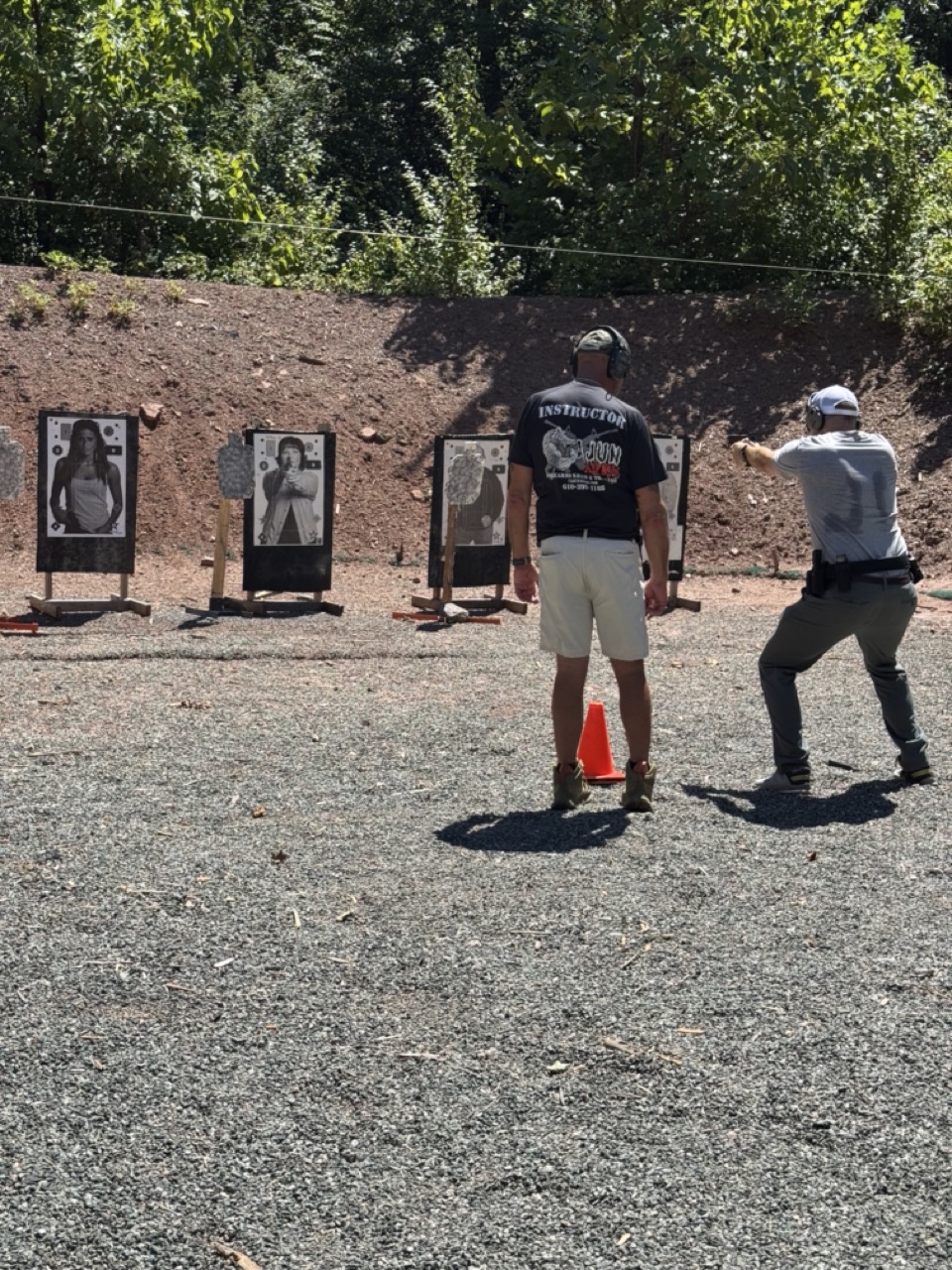
Multiple target drisll with Cajun Arms & Jim Benoit
One of the most common questions among concealed carriers is:
"How often should I train with my carry gun?"
The answer depends on your goals, experience level, and commitment to personal protection. However, if you're looking for a simple answer, here it is:
More often than you probably are now.
That doesn't mean spending every weekend at the range or firing thousands of rounds each month. In fact, effective training is often less about volume and more about consistency and purpose.
The reality is that carrying a firearm for self-defense is a serious responsibility. Like any perishable skill, defensive shooting abilities fade without regular practice. The challenge is finding a sustainable training routine that builds and maintains real-world capability.
Owning a Gun Isn't the Same as Being Prepared
Many gun owners purchase a firearm, obtain a concealed carry permit, and attend a basic training course. Those are important steps, but they are only the beginning.
Carrying a firearm for protection assumes you may someday need to make critical decisions under extreme stress. It requires skills that go beyond simply hitting a target at a shooting lane.
That's why foundational training is so important. Our Defensive Carry 1 course is designed to help armed citizens build the skills necessary to safely and effectively carry a handgun for personal protection.
Defensive shooting involves:
- Drawing efficiently from concealment
- Making decisions under pressure
- Managing recoil and follow-up shots
- Identifying threats
- Maintaining situational awareness
- Solving problems quickly and safely
These skills require maintenance.
Just as physical fitness declines without exercise, shooting performance declines without training.
The Difference Between Practice and Training
Before discussing frequency, it's important to understand the difference between practice and training.
Practice is reinforcing skills you already possess.
Training is learning new skills, testing existing skills, and identifying weaknesses.
Many shooters spend years practicing the same drills while never truly training.
Shooting slowly at a stationary target may help maintain marksmanship, but it doesn't necessarily improve defensive capability.
A balanced approach should include both practice and structured training.
If you're unsure where your current skill level stands, structured courses such as Defensive Carry 2 provide objective standards and instructor feedback that are difficult to replicate during solo practice.
The Minimum Standard: Monthly Live Fire
If you're carrying a firearm regularly, a reasonable minimum goal is one purposeful live-fire session each month.
Notice the word purposeful.
This isn't about burning through a box of ammunition while chatting with friends.
A productive range session should have specific goals, such as:
- Draw-to-first-shot drills
- Accuracy standards
- Reload practice
- Target transitions
- Shooting at varying distances
- Time-based performance goals
Even a short, focused session can provide tremendous value when approached with purpose.
Consistency is far more important than occasional marathon range days.
The Most Underutilized Tool: Dry Fire
If live-fire practice is the engine of improvement, dry fire is the fuel.
Dry fire allows shooters to practice critical skills without ammunition.
Many of the most important defensive skills can be improved through dry practice:
We cover many of these foundational skills in our article, Dry Fire Training Tips That Actually Work, including how to build productive practice sessions while avoiding common mistakes.
- Presentation from concealment
- Trigger control
- Sight acquisition
- Reloads
- Malfunction procedures
- Movement mechanics
A shooter who dry fires for ten minutes several times per week will often improve faster than someone who only visits the range occasionally.
The key is conducting dry fire safely and deliberately.
Quality matters far more than quantity.
How Often Should You Dry Fire?
For most concealed carriers, two to four dry-fire sessions per week is an excellent goal.
Each session can be as short as ten to fifteen minutes.
The objective isn't exhaustion.
The objective is repetition with focus.
Short, frequent sessions help reinforce good habits and maintain proficiency without requiring significant time or expense.
Skills Fade Faster Than Most People Realize
One reason regular training matters is that defensive skills deteriorate surprisingly quickly.
Drawing from concealment.
Efficient reloads.
Target transitions.
Movement.
Decision-making under pressure.
These skills are highly perishable.
This is one of the primary reasons many shooters stop progressing after their initial training. If you haven't already read it, our article Why Most Gun Owners Plateau After Their First Training Class explains how skill development often stalls and what you can do to continue improving.
Many shooters discover that abilities they developed during a class begin to fade within weeks if they are not maintained.
This is especially true for skills that aren't routinely used during standard range visits.
How Often Should You Take Professional Training?
Many shooters view training classes as a one-time event.
The most capable shooters view them as part of a continuous improvement process.
A good benchmark for many armed citizens is attending at least one professional defensive training course each year.
More committed students may seek instruction multiple times annually.
Professional training offers several benefits:
Advanced courses such as Defensive Carry 3 place students in increasingly demanding situations that help reveal weaknesses and refine decision-making under pressure.
- Objective feedback
- Performance standards
- Identification of bad habits
- Exposure to new techniques
- Opportunities to perform under pressure
Most importantly, quality instruction helps reveal weaknesses you may not recognize on your own.
The Goal Isn't Perfection
Some shooters become discouraged because they can't train as often as they would like.
The good news is that perfection isn't required.
The goal isn't to become a professional shooter.
The goal is to become more capable than you were yesterday.
A shooter who practices consistently for fifteen minutes a few times each week will often outperform someone who trains intensely for a month and then does nothing for six months.
Preparedness is built through consistency.
Not occasional bursts of motivation.
A Realistic Training Plan for Most Concealed Carriers
If you're looking for a practical starting point, consider this:
Weekly
- Two to four dry-fire sessions
- Ten to fifteen minutes each
Monthly
- One focused live-fire range session
-
Incorporating drills learned during courses such as our Defensive Carry Series can help ensure your practice sessions remain purposeful and measurable.
- Performance-based drills and measurable goals
Annually
- At least one professional defensive firearms course
- More if your schedule and budget allow
This approach is realistic, sustainable, and effective for most armed citizens.
Final Thoughts
There is no magic number of range trips or rounds fired that guarantees preparedness.
The shooters who improve consistently are not necessarily the ones who shoot the most.
They're the ones who train with purpose.
They seek feedback.
They maintain their skills.
They continue learning.
Carrying a firearm is a commitment to personal responsibility. The decision to carry should be accompanied by an ongoing commitment to maintaining the skills needed to use that firearm safely, effectively, and responsibly.
At Cajun Arms, we believe defensive capability is built through consistent practice, quality instruction, and a commitment to continual improvement. Whether you're just beginning your journey in Defensive Carry 1, advancing through Defensive Carry 2 and 3, or refining your skills through ongoing practice, the goal remains the same: becoming a safer, more capable, and more responsible armed citizen.
Continue Learning
- Why Most Gun Owners Plateau After Their First Training Class
- Dry Fire Training Tips That Actually Work
- Mistakes Intermediate Shooters Still Make
- Defensive Mindset: How to stay calm and think under stress
- What Makes Defensive Firearms Training Different From Regular Range Training?
- How to Build a Personal Defensive Training Plan
- Why Qualification Scores Don't Measure Defensive Readiness
- The Hidden Costs of Cheap Firearms Training
- What Experienced Concealed Carriers Wish They Knew Earlier
- What Skills Matter Most in a Defensive Encounter?
- How Often Should You Train With Your Carry Gun?
- Why Most Gun Owners Plateau After Their First Training Class
- Why Serious Shooters Across Pennsylvania Train With Cajun Arms
- Why Training Matters More Than Gear