What If You're Injured During a Defensive Encounter?
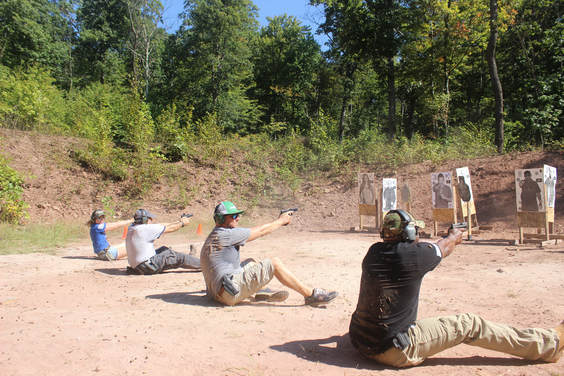
Cajun Arms Defensive Carry 4.0, West Chester, PA
Training for Injury: Preparing for the Fight You Didn't Expect
Most firearms training focuses on preventing injury.
And that's exactly what it should do.
But there is another question every armed citizen should consider:
What happens if you get hurt anyway?
If you are forced to defend yourself with a firearm, there is a very real possibility that you could sustain an injury during the encounter. Whether from a firearm, edged weapon, blunt force trauma, or a fall during the struggle, injuries are a reality that should not be ignored.
Many people mentally rehearse successful defensive encounters. Far fewer consider the possibility that they may need to continue fighting while injured.
The time to think about that possibility is before it happens.
Your Most Important Weapon Is Your Mindset
The most important tool you carry isn't your firearm.
It's your mind.
When a violent encounter begins, your mindset may determine whether you continue fighting or mentally quit.
One of the most important concepts to understand is that the goal of self-defense is not necessarily to harm an attacker.
The goal is to stop the threat.
The objective is to ensure that innocent people survive and that the attacker can no longer continue their violent actions.
If you become injured during that process, your mission does not automatically end.
You must have the mindset that regardless of what happens, you will continue working toward a successful outcome.
That mental commitment should be established long before the fight begins.
Mental Toughness Can Be Trained
Mental toughness is not something people are simply born with.
It can be developed.
Many people discover under stress that they are capable of far more than they previously believed.
The key is exposing yourself to challenges in training that require you to solve problems under pressure.
This doesn't mean recklessness.
It means placing yourself in controlled environments where you must continue functioning despite discomfort, stress, fatigue, or setbacks.
One of the reasons quality training is so valuable is that it teaches students how to think and perform when things stop going according to plan.
If you've read our article What Skills Matter Most in a Defensive Encounter?, you'll remember that emotional control and decision-making are often more important than pure shooting ability.
When You're Hit, The Fight May Not Be Over
Many people unconsciously assume that being injured means the fight is over.
Real life doesn't always work that way.
You may still need to:
- Move to safety
- Protect loved ones
- Access your firearm
- Communicate with responding authorities
- Stop an ongoing threat
The key is understanding that injury does not automatically equal incapacity.
Your focus should remain on solving the problem in front of you.
In many cases, the person who remains mentally engaged and determined gains a significant advantage over the person who mentally quits.
Force-on-Force Training Reveals Valuable Lessons
One reason force-on-force and simulation training can be so valuable is that it introduces uncertainty and consequences.
Students quickly learn that plans change.
They make mistakes.
They get surprised.
They encounter problems they didn't anticipate.
This helps build adaptability and resilience.
At Cajun Arms, we frequently use training methods that force students to think, react, and solve problems under pressure rather than simply perform scripted drills.
Those lessons often prove far more valuable than shooting another perfect group on paper.
Train Your Non-Dominant Eye
Most shooters train exclusively with their dominant eye.
Few consider what might happen if that eye becomes compromised.
Dust.
Blood.
Debris.
An impact injury.
Any of these could affect your ability to use your preferred sighting method.
A simple exercise is to occasionally practice shooting with your non-dominant eye.
Many shooters discover quickly that this is not nearly as easy as they expected.
Like any skill, it improves with practice.
Always conduct such training safely and under appropriate range conditions.
Practice One-Handed Skills
If one arm becomes injured, can you still access your firearm?
Can you draw?
Can you present the firearm effectively?
Can you make accurate hits?
Many shooters have never tested these skills.
Practice drawing with both your dominant and non-dominant hand during safe dry-fire sessions.
You may discover that your carry position works wonderfully with one hand and poorly with the other.
These discoveries are much better made during training than during an emergency.
This is one reason many students leave our classes with a completely different perspective on carry methods and equipment choices.
Can You Run Your Gun With One Hand?
Drawing the firearm is only part of the challenge.
What happens if you experience a malfunction?
Can you clear it?
Can you reload?
Can you manipulate the firearm using only one hand?
These are skills that require practice and experimentation.
Every firearm and every shooter may require slightly different techniques.
Safe dry-fire training is an excellent place to begin exploring these challenges.
The goal isn't to memorize a single solution.
The goal is to become adaptable when things go wrong.
Don't Forget Unconventional Positions
Most range training occurs from a comfortable standing position.
Defensive encounters rarely offer that luxury.
You may find yourself:
- On the ground
- Against a wall
- Behind cover
- Seated in a vehicle
- Knocked off balance
- Protecting a family member
Can you still access your firearm?
Can you still make accurate hits?
Can you still solve the problem?
These are questions worth exploring during professional training.
If you've read our article How Often Should You Train With Your Carry Gun?, you'll remember that meaningful practice goes beyond simply firing rounds at a stationary target.
Train for Reality, Not Perfection
One of the biggest mistakes gun owners make is imagining defensive encounters as clean, predictable events.
Reality is rarely neat.
The attacker won't stand perfectly still.
The lighting won't be ideal.
Your footing may be compromised.
Your plan may fail.
You may even be injured.
That's why defensive training should focus on solving problems rather than rehearsing perfect scenarios.
Preparedness comes from adaptability.
The Goal Is Capability
No one can train for every possible situation.
That's not the goal.
The goal is to develop the mindset, skills, and confidence necessary to adapt when circumstances change.
A capable defender can continue functioning despite uncertainty, stress, and even injury.
That capability is built through deliberate practice, realistic training, and a commitment to continual improvement.
Final Thoughts
Most people train to avoid injury.
Few train for the possibility that they may need to continue fighting after being injured.
The reality is that violent encounters are unpredictable. If you carry a firearm for self-defense, it makes sense to consider how you would respond if things don't go according to plan.
At Cajun Arms, we believe defensive training should prepare students for reality—not ideal circumstances. Through structured instruction, realistic problem-solving, and practical skill development, students learn to remain effective when conditions are far from perfect.
Interested in building practical defensive skills? Explore our training opportunities and continue developing the mindset and capabilities that matter most when it counts.
Continue Learning
- How to Build a Personal Defensive Training Plan
- Why Qualification Scores Don't Measure Defensive Readiness
- The Hidden Costs of Cheap Firearms Training
- What Experienced Concealed Carriers Wish They Knew Earlier
- What Skills Matter Most in a Defensive Encounter?
- How Often Should You Train With Your Carry Gun?
- Why Most Gun Owners Plateau After Their First Training Class
- Why Serious Shooters Across Pennsylvania Train With Cajun Arms
- Why Training Matters More Than Gear
- Mistakes Intermediate Shooters Still Make
- Dry Fire Training: What Actually Works vs. What’s a Waste of Time
- Top 10 Mistakes New Concealed Carriers Make (And How to Avoid Them)
- Why Are You Just Standing There? Shooting From Unconventional Positions
- You Get What You Pay For: Why Quality Firearms Training Matters
- How to Choose a Firearms Training Class in Pennsylvania (2026 Guide)
- Teaching Your Child Gun Safety: A Parent's Complete Guide
- AR15 for Home Defense: Choosing the Right Gun for the Job
- Understanding Self-Defense Laws and Concealed Carry in Pennsylvania: A Comprehensive Overview
- Low-Light Defensive Shooting: Techniques You Won’t Learn on the Square Range
- Defensive Mindset: How to Stay Calm and Think Under Stress
- Why De-Escalation Training Completes a Well-Rounded Defensive Education
- Self Defense Training for Your Family in Uncertain Times
- How Often Should You Train With Your Concealed Carry Firearm?
- Where to Sell Used Firearms: Why Cajun Arms is Your Premier PA Choice
- Why Training Outdoors in Winter Matters More Than You Think
- Why Most Gun Owners Fail Under Stress — And How Stress-Inoculation Training Fixes It
- Avoidance and Awareness: Your First Line of Self-Defense
- Mental Preparation for Defensive Shooting Class
- Mental Preparation for Defensive Shooting: The Missing Link for CCW Holders
- 2025/26 Trends in CCW & Concealed Carry: What Every Responsible Gun Owner Should Know
- Mastering Speed and Precision in Defensive Pistol Training: A Complete Guide
- Why Small Unit Tactics (SUT) Don’t Work for Civilians — And What Does: A Cajun Arms Guide
- What to Expect in a Defensive Pistol Class
- Essential AR15 Maintenance Tips for Maximum Reliability and Long Service Life
- Bad Guys Come Out in the Heat
- Looking for “Firearms Training Near Me”? Here’s What to Expect—and How to Choose the Right Instructor
- Speed vs. Precision: What Matters Most in a Defensive Shooting?
- Dynamic Movement & Shooting: Train Like You Fight
- Firearms Training and Home Defense
- From Basics to Advanced: Tactical Shooting Courses at Cajun Arms
- Firearms Training Near Me - Cajun Arms West Chester, PA
- Master Your AR-15 with Expert Training at Cajun Arms
- Defensive Pistol Training for Self-Defense — Cajun Arms
- Choose the Best Home Defense Firearm — Cajun Arms Guidance
- Becoming a Firearms Instructor: The Path to Excellence
- Empowerment Through Precision: Elevating Your Self-Defense Firearm Skills
- Training Scars: Breaking Free From Flat-Range Habits
- Vehicle Defense
- WATCH WHAT YOU FEED YOUR GUN
- CAN YOU BE ACCOUNTABLE FOR YOUR SPEED?
- Training with Micro-Compacts
- A Follow Up to the “Hardest Shooting Fundamental”
- So You Want To Go Fast?
- The Hardest Shooting Fundamental: Mastering Follow-Through
- New Gun, New Habits
- Home Defense Shotgun Set Up
- What Should I be Doing at the Range?
- Fighting From The Ground
- Take Charge of Recoil, don’t let it control you…
- Think Before You Speak
- Grab a Partner
- The Risks of Being Nice
- Lead With Your Eyes (not your muzzle)
- Train as You Carry… Leave the competition and tactical gear behind
- KNIFE VS GUN - A quick scenario to ponder
- Frankengun vs. Factory: Choosing a Reliable AR for Self-Defense
- Program Your Brain: Why Perfect Practice Beats Fast Practice
- What If You're Injured During a Defensive Encounter?
- Lights and Lasers and YouTube Ninjas
- Our Stance on Your Stance
- Training for More Than One Attacker…
- Keep Your Head On - Consistency
- Defensive Shotgun Accessories: What You Need—and What You Don't
- Charlottesville - lies and hypocrites
- Keep Your Finger Off the Trigger…
- …and Re-holster
- Unauthorized persons…
- Focus on What will Save Your Life
- Train for Success with your Firearms
- Every Day is a Good Day to Be Ready
- Appendix Carry - Is it right for you?
- Learn to See the Light: Low-Light Firearms Training You Can Use
- Anti-Gun Sentiment on the Internet: How It Affects Lawful Firearms Owners
- Point Shooting: Does it work?
- About your self-defense carry ammo...
- See the Whole Picture... Know how to reload reflexively
- One-Handed Shooting
- Every Bullet Has a Price
- On Magazine Changes... fighting for your life
- There is Such a Thing as Too Fast...
- A Threat at Arm's Length
- In Defensive Shooting, Missing Your Target Has Consequences...
- Operating out of your Comfort Zone...
- Every Bullet Has A Price - Operational Speed
- Car and Truck Gun Safety: Protect Yourself Responsibly
- Keep a Clear Head
- Get Training!
- Women and Firearms at Cajun Arms