Operating out of your Comfort Zone...
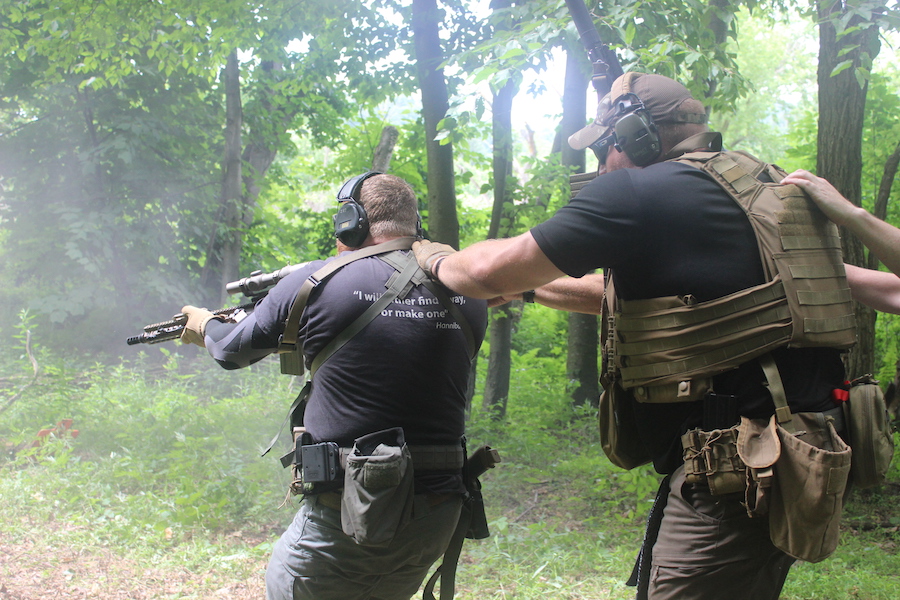
Rifle training with Cajun Arms, Jim Benoit
Why Defensive Training Must Prepare You for More Than Shooting
We make thousands of decisions every day.
Most are insignificant.
What should I eat?
Which route should I take?
When should I leave for work?
But occasionally, we face decisions that carry real consequences.
Those decisions are often shaped by our experience, training, values, and the circumstances surrounding us.
In a serious emergency or prolonged crisis, those decisions can become much more difficult.
The environment changes.
Information becomes incomplete.
Stress increases.
Resources may become limited.
And suddenly, the assumptions that made life seem predictable no longer apply.
This is why defensive preparedness isn't simply about learning how to shoot a firearm.
It's about learning how to think when you're operating outside your comfort zone.
Comfort Is Not the Same as Preparedness
Most of us live predictable lives.
We go to work.
We go to the grocery store.
We interact with friends and neighbors.
We assume emergency services will be available when we need them.
We expect the power to come back on.
We expect the shelves to be restocked.
We expect our phones to work.
Most of the time, those assumptions are reasonable.
But preparedness means recognizing that circumstances can change.
A natural disaster, extended power outage, civil emergency, or other major disruption can quickly force people to operate outside the routines they've relied upon for years.
The question isn't whether you can predict exactly what will happen.
You can't.
The question is whether you've thought about how you will respond when your normal options disappear.
Defensive Readiness Is About Decision-Making
A firearm is a tool.
But the most important tool you carry is your ability to make sound decisions.
In a defensive encounter, you may have to decide whether to:
- Leave
- Stay
- Call for help
- De-escalate
- Protect someone else
- Seek cover
- Avoid a confrontation
The firearm is only one option among many.
And in many situations, it may never need to be used.
This is one reason we emphasize decision-making throughout our defensive firearms training.
The goal isn't simply to make you a better shooter.
The goal is to help you become a more capable problem solver.
Our article What Skills Matter Most in a Defensive Encounter? explores why defensive readiness requires much more than marksmanship.
Stress Changes the Way We Think
When people are stressed, their decision-making can change dramatically.
Information may be harder to process.
Time may seem distorted.
Attention may narrow.
Emotions can become more powerful.
This is why training under increasingly challenging conditions is valuable.
You can't completely recreate a life-threatening emergency on a shooting range.
But you can develop habits that make you more comfortable operating when things aren't going according to plan.
Training teaches you to pause.
Assess.
Decide.
Act.
Then reassess.
That process is useful whether you're dealing with a defensive encounter or a completely different type of emergency.
The Hardest Decisions May Not Involve a Firearm
Consider two very different situations.
One involves an immediate threat to your family.
The other involves a friend, neighbor, or acquaintance who needs help during a prolonged emergency.
The first may trigger an immediate defensive response.
The second may create an entirely different kind of conflict.
How much assistance can you provide?
How do you balance helping others with protecting your own family?
What resources do you have?
How long can you sustain them?
What happens if the emergency lasts for days or weeks?
These aren't shooting problems.
They're preparedness and decision-making problems.
The responsible approach isn't to assume that every crisis will become a fight.
It's to think through difficult circumstances ahead of time so you're less likely to make impulsive decisions when you're under pressure.
Preparedness Should Include Your Community
One of the greatest advantages you can have during a crisis isn't equipment.
It's people.
Family.
Friends.
Neighbors.
Trusted members of your community.
People who know each other and have established relationships are often better positioned to work together when circumstances become difficult.
Talk with the people closest to you.
Have conversations about emergency preparedness.
Discuss communication.
Discuss meeting locations.
Discuss medical needs.
Discuss responsibilities.
Discuss what happens if normal services aren't available.
You don't need to create a dramatic survival plan.
You simply need to understand what the people around you are capable of doing.
Who has medical training?
Who knows how to repair things?
Who has emergency management experience?
Who can stay calm under pressure?
Who has the physical ability to help?
Who is good at organizing?
Everyone has strengths.
Everyone has weaknesses.
Understanding both is part of being prepared.
Don't Wait for a Crisis to Discover Your Weaknesses
The worst time to discover that your family has no emergency communication plan is during an emergency.
The worst time to discover that you don't know how to treat an injury is when someone is bleeding.
The worst time to discover that your defensive skills are rusty is when you need them.
Preparation gives you the opportunity to identify those weaknesses before the stakes become high.
This is true of firearms training.
It's true of emergency preparedness.
And it's true of your relationships with the people you depend upon.
Train Outside Your Comfort Zone
One of the best ways to improve your capabilities is to deliberately expose yourself to challenges that aren't comfortable.
For a shooter, that might mean:
- Training in low light
- Shooting from unconventional positions
- Practicing one-handed firearm manipulation
- Working through malfunctions
- Training while moving
- Making decisions under time pressure
- Solving problems with incomplete information
These skills aren't developed by simply shooting the same drill repeatedly.
They require you to think.
Our article How to Build a Personal Defensive Training Plan provides a framework for developing a progressive approach to training rather than simply going to the range and shooting whatever feels comfortable.
Don't Confuse Discomfort With Failure
Operating outside your comfort zone doesn't mean you should immediately jump into the most difficult training imaginable.
Progression matters.
A beginner should not start with the most complicated defensive scenario possible.
Start with fundamentals.
Build competence.
Then gradually introduce complexity.
This is the philosophy behind progressive defensive firearms training.
You learn a skill.
You practice it.
You develop consistency.
Then you add another layer.
Over time, your comfort zone expands.
That's how capability is built.
Mental Preparation Matters
One of the most overlooked aspects of defensive preparedness is mental preparation.
You should occasionally ask yourself:
What would I do if the power went out for several days?
What if I couldn't reach my family?
What if normal communications failed?
What if I had to care for an injured person?
What if I had to make decisions without complete information?
The goal isn't to become paranoid.
The goal is to become familiar with the idea that circumstances can change.
The more you've thought about a problem beforehand, the less likely you are to be completely overwhelmed when it happens.
Your Values Don't Have to Disappear During a Crisis
Preparedness should not mean abandoning your principles.
In fact, good preparation should help you maintain them.
The idea that survival requires you to immediately abandon your integrity, compassion, or concern for others is unnecessarily simplistic.
Real preparedness means finding ways to protect yourself and your family while still making responsible decisions.
That might mean building relationships before a crisis.
It might mean having extra supplies so you aren't forced into difficult choices.
It might mean knowing when to help someone—and when doing so would put your family at unacceptable risk.
Preparation creates options.
And options make difficult decisions easier.
Build Relationships Before You Need Them
A crisis is a terrible time to discover who you can trust.
Build those relationships now.
Get to know your neighbors.
Stay connected to your community.
Talk to your family.
Train with trusted friends.
Learn from people with different skills.
Preparedness doesn't have to be an individual pursuit.
In many situations, a well-prepared community is far more resilient than an isolated individual.
The Goal Is Capability, Not Fear
The purpose of defensive training is not to make you afraid of the world.
It's the opposite.
The purpose is to give you confidence.
Confidence that you can recognize problems.
Confidence that you can make decisions.
Confidence that you can protect yourself if necessary.
Confidence that you can remain calm when circumstances become difficult.
Confidence that you have prepared before the crisis arrives.
That's what it means to operate outside your comfort zone.
You don't eliminate uncertainty.
You become better equipped to handle it.
Final Thoughts
None of us knows what the future holds.
Most of us will never experience a major crisis.
But that doesn't mean preparation is wasted.
The same skills that make you a better defensive shooter can also make you a better decision-maker.
The same mindset that helps you remain calm during a stressful training exercise can help you respond more effectively during an emergency.
The same relationships that make your community stronger during normal times can become invaluable when circumstances change.
At Cajun Arms, we believe defensive preparedness is about more than firearms.
It's about developing capable people.
People who can think.
People who can adapt.
People who can make good decisions under pressure.
And people who understand that preparation isn't about expecting the worst.
It's about being ready for the unexpected.
Train outside your comfort zone.
Build your skills before you need them.
Prepare your family.
Build strong relationships.
And when circumstances become difficult, you'll have a much better chance of responding with confidence rather than reacting out of fear.
- How to Build a Personal Defensive Training Plan
- Why Qualification Scores Don't Measure Defensive Readiness
- The Hidden Costs of Cheap Firearms Training
- What Experienced Concealed Carriers Wish They Knew Earlier
- What Skills Matter Most in a Defensive Encounter?
- How Often Should You Train With Your Carry Gun?
- Why Most Gun Owners Plateau After Their First Training Class
- Why Serious Shooters Across Pennsylvania Train With Cajun Arms
- Why Training Matters More Than Gear
- Mistakes Intermediate Shooters Still Make
- Dry Fire Training: What Actually Works vs. What’s a Waste of Time
- Top 10 Mistakes New Concealed Carriers Make (And How to Avoid Them)
- Why Are You Just Standing There? Shooting From Unconventional Positions
- You Get What You Pay For: Why Quality Firearms Training Matters
- How to Choose a Firearms Training Class in Pennsylvania (2026 Guide)
- Teaching Your Child Gun Safety: A Parent's Complete Guide
- AR15 for Home Defense: Choosing the Right Gun for the Job
- Understanding Self-Defense Laws and Concealed Carry in Pennsylvania: A Comprehensive Overview
- Low-Light Defensive Shooting: Techniques You Won’t Learn on the Square Range
- Defensive Mindset: How to Stay Calm and Think Under Stress
- Why De-Escalation Training Completes a Well-Rounded Defensive Education
- Self Defense Training for Your Family in Uncertain Times
- How Often Should You Train With Your Concealed Carry Firearm?
- Where to Sell Used Firearms: Why Cajun Arms is Your Premier PA Choice
- Why Training Outdoors in Winter Matters More Than You Think
- Why Most Gun Owners Fail Under Stress — And How Stress-Inoculation Training Fixes It
- Avoidance and Awareness: Your First Line of Self-Defense
- Mental Preparation for Defensive Shooting Class
- Mental Preparation for Defensive Shooting: The Missing Link for CCW Holders
- 2025/26 Trends in CCW & Concealed Carry: What Every Responsible Gun Owner Should Know
- Mastering Speed and Precision in Defensive Pistol Training: A Complete Guide
- Why Small Unit Tactics (SUT) Don’t Work for Civilians — And What Does: A Cajun Arms Guide
- What to Expect in a Defensive Pistol Class
- Essential AR15 Maintenance Tips for Maximum Reliability and Long Service Life
- Bad Guys Come Out in the Heat
- Looking for “Firearms Training Near Me”? Here’s What to Expect—and How to Choose the Right Instructor
- Speed vs. Precision: What Matters Most in a Defensive Shooting?
- Dynamic Movement & Shooting: Train Like You Fight
- Firearms Training and Home Defense
- From Basics to Advanced: Tactical Shooting Courses at Cajun Arms
- Firearms Training Near Me - Cajun Arms West Chester, PA
- Master Your AR-15 with Expert Training at Cajun Arms
- Defensive Pistol Training for Self-Defense — Cajun Arms
- Choose the Best Home Defense Firearm — Cajun Arms Guidance
- Becoming a Firearms Instructor: The Path to Excellence
- Empowerment Through Precision: Elevating Your Self-Defense Firearm Skills
- Training Scars: Breaking Free From Flat-Range Habits
- Vehicle Defense
- WATCH WHAT YOU FEED YOUR GUN
- CAN YOU BE ACCOUNTABLE FOR YOUR SPEED?
- Training with Micro-Compacts
- A Follow Up to the “Hardest Shooting Fundamental”
- So You Want To Go Fast?
- The Hardest Shooting Fundamental: Mastering Follow-Through
- New Gun, New Habits
- Home Defense Shotgun Set Up
- What Should I be Doing at the Range?
- Fighting From The Ground
- Take Charge of Recoil, don’t let it control you…
- Think Before You Speak
- Grab a Partner
- The Risks of Being Nice
- Lead With Your Eyes (not your muzzle)
- Train as You Carry… Leave the competition and tactical gear behind
- KNIFE VS GUN - A quick scenario to ponder
- Frankengun vs. Factory: Choosing a Reliable AR for Self-Defense
- Program Your Brain: Why Perfect Practice Beats Fast Practice
- What If You're Injured During a Defensive Encounter?
- Lights and Lasers and YouTube Ninjas
- Our Stance on Your Stance
- Training for More Than One Attacker…
- Keep Your Head On - Consistency
- Defensive Shotgun Accessories: What You Need—and What You Don't
- Charlottesville - lies and hypocrites
- Keep Your Finger Off the Trigger…
- …and Re-holster
- Unauthorized persons…
- Focus on What will Save Your Life
- Train for Success with your Firearms
- Every Day is a Good Day to Be Ready
- Appendix Carry - Is it right for you?
- Learn to See the Light: Low-Light Firearms Training You Can Use
- Anti-Gun Sentiment on the Internet: How It Affects Lawful Firearms Owners
- Point Shooting: Does it work?
- About your self-defense carry ammo...
- See the Whole Picture... Know how to reload reflexively
- One-Handed Shooting
- Every Bullet Has a Price
- On Magazine Changes... fighting for your life
- There is Such a Thing as Too Fast...
- A Threat at Arm's Length
- In Defensive Shooting, Missing Your Target Has Consequences...
- Operating out of your Comfort Zone...
- Every Bullet Has A Price - Operational Speed
- Car and Truck Gun Safety: Protect Yourself Responsibly
- Keep a Clear Head
- Get Training!
- Women and Firearms at Cajun Arms