Keep Your Finger Off the Trigger…
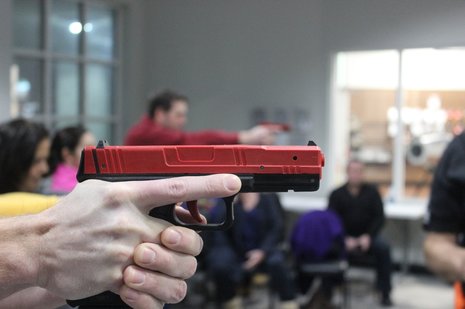
High register with Cajun Arms, West Chester, PA
“Keep your finger off the trigger until you’ve positively identified your target and made the conscious decision to shoot.”
This is not just a saying—it’s one of the foundational rules of firearms safety, and one that every responsible gun owner must master. Yet in our firearms training courses, we continue to see how difficult this rule can be for new gun owners, families, and even experienced shooters who never received proper instruction.
At Cajun Arms, we take trigger finger discipline seriously—because lives depend on it.
If you own a firearm for personal protection, hunting, recreation, or work, understanding and practicing this rule consistently is non-negotiable.
👉 If you’re new to firearms or want to reinforce safe habits, book a professional firearms training class today.
Why Trigger Finger Discipline Is So Important
Trigger finger discipline is the practice of keeping your finger completely off the trigger until:
-
Your sights are on target
-
You have identified the target
-
You have consciously decided to fire
Negligent discharges almost always occur because this rule was violated.
Common Causes of Accidental Discharges
-
Startle response
-
Loss of balance
-
Slips during the draw or reholstering
-
Poor training or bad habits
-
Stress or adrenaline
A firearm does exactly what it’s designed to do when the trigger is pressed—it fires. The firearm is not the problem. Improper handling is.
What We See in Firearms Training Classes
Lately, we’ve encountered more beginning students than usual who struggle to keep their finger off the trigger—even after being told repeatedly.
That’s why during our classes and private sessions, we are relentless and unapologetic about enforcing this rule.
We will not issue a certificate until a student demonstrates complete, consistent safe gun handling—from the draw and presentation, through engaging a target, all the way to reluctantly reholstering.
This standard protects:
-
The student
-
Other students
-
Instructors
-
Family members at home
👉 Safe habits must be automatic before live fire begins.
Positive Reinforcement Works Better Than Negative Commands
Instead of saying “don’t put your finger on the trigger”, we reinforce the correct behavior:
“Keep your finger high and indexed.”
Why does this matter?
Because under stress, your brain defaults to what it knows, not what it avoids. Training your mind and body toward a positive action builds consistency and confidence.
Don’t Be Lazy: Find a Home for Your Trigger Finger
One of the most overlooked aspects of trigger finger discipline is finger placement when not shooting.
Where Your Finger Should NOT Be
-
❌ On the trigger
-
❌ Inside the trigger guard
-
❌ Resting on the front of the trigger guard
Where Your Finger SHOULD Be
-
✅ Indexed high along the frame
-
✅ Ideally touching or near the ejection port
-
✅ Consistent every single time
Your finger needs a dedicated resting place—not floating, not hovering, and not guessing.
Get comfortable with that spot. That is where your finger lives.
Safe Dry Fire Practice at Home (Done Correctly)
Dry fire training is an excellent way to reinforce safe gun handling—but only if done correctly.
Step-by-Step Home Dry Fire Safety Checklist
-
Clear your firearm
-
Double-check it
-
Remove all ammunition from magazines
-
Take ammo into another room
-
Triple-check there is no ammo in the training room
Only then should practice begin.
👉 If you’re unsure, professional instruction removes all doubt. Contact us to schedule one-on-one training.
Living With the Gun: Real-World Trigger Discipline
Once your firearm is confirmed empty:
-
Hold the gun pointed in a safe direction
-
Keep your trigger finger indexed high
-
Walk around the room
-
Sit, stand, watch TV
-
Practice existing safely with the firearm
This builds neuromuscular habits that transfer directly to real-world handling.
The goal is simple:
Finger off the trigger becomes your default behavior.
Mirror Practice: Draw Without the Trigger
Practicing your draw stroke in front of a mirror allows you to visually confirm safe habits.
What to Focus On:
-
Smooth draw
-
High trigger finger index
-
Proper grip
-
Controlled presentation
Repeat this until fatigue sets in. Then repeat it again.
👉 Repetition builds competence. Competence builds safety.
Use a Training Gun If Needed
If your finger still feels like it has a “trigger magnet,” switch to a training gun:
-
Blue gun
-
Red gun
-
Orange gun
-
Yellow gun
Color doesn’t matter—safety does.
With a training gun you can:
-
Walk around your house
-
Practice room clearing
-
Draw and holster
-
Reinforce finger discipline
All without risk.
Why Professional Firearms Training Matters
Owning a firearm does not make you safe.
Hitting a target does not make you responsible.
Your firearm is only as safe as the habits you’ve built.
At Cajun Arms in West Chester, PA, we provide structured, professional firearms training for:
-
New gun owners
-
Families
-
Corporate clients
-
Responsible civilians
👉 If you live near West Chester or Chester County, professional training is closer than you think. Book a class today.
Local Firearms Training in West Chester, PA
We proudly serve:
-
West Chester
-
Chester County
-
Southeastern Pennsylvania
Our training emphasizes:
-
Safety-first mindset
-
Real-world handling
-
Accountability
-
Confidence without ego
If you’re searching for professional firearms training in West Chester, PA, we’re here to help.
Final Thoughts: Safety Is a Skill
Trigger finger discipline is not a suggestion—it is a lifelong skill.
Repetition, structured practice, and professional instruction lead to:
-
Safer gun handling
-
Reduced negligent discharges
-
Confidence under pressure
Remember:
Your sidearm does no good if you cannot handle it safely.
👉 Ready to train the right way? Contact Cajun Arms today.
- How to Build a Personal Defensive Training Plan
- Why Qualification Scores Don't Measure Defensive Readiness
- The Hidden Costs of Cheap Firearms Training
- What Experienced Concealed Carriers Wish They Knew Earlier
- What Skills Matter Most in a Defensive Encounter?
- How Often Should You Train With Your Carry Gun?
- Why Most Gun Owners Plateau After Their First Training Class
- Why Serious Shooters Across Pennsylvania Train With Cajun Arms
- Why Training Matters More Than Gear
- Mistakes Intermediate Shooters Still Make