Training for More Than One Attacker…
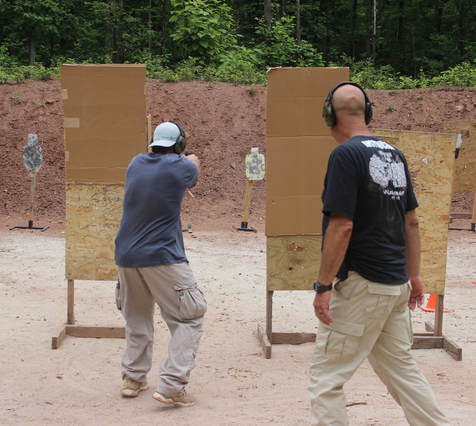
Cajun Arms defensive pistol training in West Chester, PA
Training for More Than One Attacker: Why Defensive Shooters Must Prepare for the Real World
Awareness Is Your First Line of Defense
Violent criminal predators are rarely bold lone wolves. More often, they behave like pack animals—seeking high-reward targets while expending the least amount of effort and assuming the odds are stacked in their favor. That usually means multiple attackers.
If you train for only one threat, you are training for a best-case scenario that may never come. Real-world self-defense encounters—especially robberies, assaults, and street crimes—frequently involve two or more attackers working together. Preparing for that reality is a critical part of responsible concealed carry and defensive firearms training.
At Cajun Arms, we emphasize this concept early, even in Defensive Carry Level 1, because awareness and post-engagement habits save lives.
Why We Teach Scanning After Every Engagement
If you’ve trained with us, you already know this:
the fight doesn’t end when one threat goes down.
During live-fire drills, students are required to assess and scan after neutralizing a target. Why? Because fixation kills. If all your attention stays locked on the attacker in front of you, you may completely miss his partner waiting off-angle, behind cover, or in the shadows.
This habit—fight, assess, scan—is not range theatrics. It’s a survival skill.
Threat Prioritization Happens Fast—or Not at All
Let’s assume you do everything right and immediately recognize multiple attackers. Now comes the hard part: deciding who to address first.
-
The attacker with a bat at five feet
-
The attacker with a knife at ten feet
-
The attacker with a firearm at fifteen feet
Every one of them is capable of killing you. The problem?
Analysis takes time—and time is something you do not have.
Overthinking threat hierarchy can cost you the fight.
Shoot and Move: Break Their Plan
Instead of trying to calculate which attacker is “most dangerous,” a more survivable approach is:
Engage the first clearly identifiable deadly threat—then MOVE.
Movement disrupts coordination, forces attackers to react, and buys you time. It can also:
-
Create distance from contact weapons
-
Force attackers into each other’s line of fire
-
Reduce your exposure to simultaneous attacks
Positioning matters. If you can maneuver so that one attacker is between you and another—especially an armed attacker—you’ve turned their numbers into a liability. Think in terms of stacking attackers so they line up instead of surrounding you.
Walls, vehicles, doorways, and barriers should be used deliberately. This is why we encourage scenario-based trainingwith inert guns, SIRT pistols, and controlled movement drills.
Stacking Attackers: One at a Time Beats Many at Once
Just like in martial arts, the goal against multiple attackers is rarely domination—it’s management.
Your movement should aim to:
-
Keep attackers from flanking you
-
Force them into narrow lanes of approach
-
Limit how many can engage you at once
Bad guys don’t want to get shot by their own accomplice. Use that.
Disparity of Force: What the Law Considers Reasonable
Even if attackers are unarmed, disparity of force may legally justify defensive firearm use. Factors can include:
-
Number of attackers
-
Physical size or strength differences
-
Inability to safely retreat
-
Likelihood of serious bodily harm or death
This is not legal advice—but it is reality.
What matters is whether your response is reasonable and explainable. If one attacker is stopped and the others flee, deadly force is no longer justified. Shooting retreating threats who no longer pose imminent danger will land you in prison.
Understanding this balance is part of advanced defensive training—not internet bravado.
Engagement Strategies: One Size Does Not Fit All
There are two commonly taught approaches when facing multiple attackers:
1. “Everyone Gets One”
Sometimes called boarding house rules, this approach involves delivering at least one solid hit on each visible attacker before returning to finish a primary threat. The idea is to disrupt momentum and slow everyone down.
2. Finish One, Then Move
In other cases, delivering two or three well-placed rounds to the first threat may immediately stop that attacker—reducing the overall problem faster. The downside is that other threats remain active longer.
Neither approach is universally correct. Context, distance, movement, and terrain dictate the answer.
This is why canned solutions fail—and training matters.
Cover, Distance, and Survival Priorities
When multiple attackers are present, your instincts will pull you toward cover—and for good reason. Cover reduces exposure and makes flanking more difficult. However, hugging cover too tightly can limit your field of view and cause you to lose track of attackers.
Your goal is simple:
Stay alive long enough to escape.
If a clear path to disengage and break contact appears—take it. Winning a gunfight doesn’t mean standing your ground. It means surviving.
Train for the Fight You Don’t Want
The biggest takeaway is this:
If there is one attacker, assume there are others.
If you see one weapon, assume there are more.
This mindset shapes how we train at Cajun Arms—from scanning protocols to movement drills to advanced Defensive Carry courses.
Training for a single attacker is necessary.
Training for multiple attackers is the next level.
When you’re prepared for the worst, handling the simpler problems becomes far easier.
Fight. Assess. Scan. Top Off.
This is why we train the way we do.
If you want to take your defensive skills beyond square-range fundamentals and learn how to manage real-world threats, we invite you to train with us.
👉 Explore our Defensive Carry training series
👉 Learn more about Cajun Arms firearms instruction
👉 Contact us with questions about advanced defensive training
Get firearms training.
We’ll see you in class.
- How to Build a Personal Defensive Training Plan
- Why Qualification Scores Don't Measure Defensive Readiness
- The Hidden Costs of Cheap Firearms Training
- What Experienced Concealed Carriers Wish They Knew Earlier
- What Skills Matter Most in a Defensive Encounter?
- How Often Should You Train With Your Carry Gun?
- Why Most Gun Owners Plateau After Their First Training Class
- Why Serious Shooters Across Pennsylvania Train With Cajun Arms
- Why Training Matters More Than Gear
- Mistakes Intermediate Shooters Still Make
- Dry Fire Training: What Actually Works vs. What’s a Waste of Time
- Top 10 Mistakes New Concealed Carriers Make (And How to Avoid Them)
- Why Are You Just Standing There? Shooting From Unconventional Positions
- You Get What You Pay For: Why Quality Firearms Training Matters
- How to Choose a Firearms Training Class in Pennsylvania (2026 Guide)
- Teaching Your Child Gun Safety: A Parent's Complete Guide
- AR15 for Home Defense: Choosing the Right Gun for the Job
- Understanding Self-Defense Laws and Concealed Carry in Pennsylvania: A Comprehensive Overview
- Low-Light Defensive Shooting: Techniques You Won’t Learn on the Square Range
- Defensive Mindset: How to Stay Calm and Think Under Stress
- Why De-Escalation Training Completes a Well-Rounded Defensive Education
- Self Defense Training for Your Family in Uncertain Times
- How Often Should You Train With Your Concealed Carry Firearm?
- Where to Sell Used Firearms: Why Cajun Arms is Your Premier PA Choice
- Why Training Outdoors in Winter Matters More Than You Think
- Why Most Gun Owners Fail Under Stress — And How Stress-Inoculation Training Fixes It
- Avoidance and Awareness: Your First Line of Self-Defense
- Mental Preparation for Defensive Shooting Class
- Mental Preparation for Defensive Shooting: The Missing Link for CCW Holders
- 2025/26 Trends in CCW & Concealed Carry: What Every Responsible Gun Owner Should Know
- Mastering Speed and Precision in Defensive Pistol Training: A Complete Guide
- Why Small Unit Tactics (SUT) Don’t Work for Civilians — And What Does: A Cajun Arms Guide
- What to Expect in a Defensive Pistol Class
- Essential AR15 Maintenance Tips for Maximum Reliability and Long Service Life
- Bad Guys Come Out in the Heat
- Looking for “Firearms Training Near Me”? Here’s What to Expect—and How to Choose the Right Instructor
- Speed vs. Precision: What Matters Most in a Defensive Shooting?
- Dynamic Movement & Shooting: Train Like You Fight
- Firearms Training and Home Defense
- From Basics to Advanced: Tactical Shooting Courses at Cajun Arms
- Firearms Training Near Me - Cajun Arms West Chester, PA
- Master Your AR-15 with Expert Training at Cajun Arms
- Defensive Pistol Training for Self-Defense — Cajun Arms
- Choose the Best Home Defense Firearm — Cajun Arms Guidance
- Becoming a Firearms Instructor: The Path to Excellence
- Empowerment Through Precision: Elevating Your Self-Defense Firearm Skills
- Training Scars: Breaking Free From Flat-Range Habits
- Vehicle Defense
- WATCH WHAT YOU FEED YOUR GUN
- CAN YOU BE ACCOUNTABLE FOR YOUR SPEED?
- Training with Micro-Compacts
- A Follow Up to the “Hardest Shooting Fundamental”
- So You Want To Go Fast?
- The Hardest Shooting Fundamental: Mastering Follow-Through
- New Gun, New Habits
- Home Defense Shotgun Set Up
- What Should I be Doing at the Range?
- Fighting From The Ground
- Take Charge of Recoil, don’t let it control you…
- Think Before You Speak
- Grab a Partner
- The Risks of Being Nice
- Lead With Your Eyes (not your muzzle)
- Train as You Carry… Leave the competition and tactical gear behind
- KNIFE VS GUN - A quick scenario to ponder
- Frankengun vs. Factory: Choosing a Reliable AR for Self-Defense
- Program Your Brain: Why Perfect Practice Beats Fast Practice
- What If You're Injured During a Defensive Encounter?
- Lights and Lasers and YouTube Ninjas
- Our Stance on Your Stance
- Training for More Than One Attacker…
- Keep Your Head On - Consistency
- Defensive Shotgun Accessories: What You Need—and What You Don't
- Charlottesville - lies and hypocrites
- Keep Your Finger Off the Trigger…
- …and Re-holster
- Unauthorized persons…
- Focus on What will Save Your Life
- Train for Success with your Firearms
- Every Day is a Good Day to Be Ready
- Appendix Carry - Is it right for you?
- Learn to See the Light: Low-Light Firearms Training You Can Use
- Anti-Gun Sentiment on the Internet: How It Affects Lawful Firearms Owners
- Point Shooting: Does it work?
- About your self-defense carry ammo...
- See the Whole Picture... Know how to reload reflexively
- One-Handed Shooting
- Every Bullet Has a Price
- On Magazine Changes... fighting for your life
- There is Such a Thing as Too Fast...
- A Threat at Arm's Length
- In Defensive Shooting, Missing Your Target Has Consequences...
- Operating out of your Comfort Zone...
- Every Bullet Has A Price - Operational Speed
- Car and Truck Gun Safety: Protect Yourself Responsibly
- Keep a Clear Head
- Get Training!
- Women and Firearms at Cajun Arms