How Often Should You Train With Your Concealed Carry Firearm?
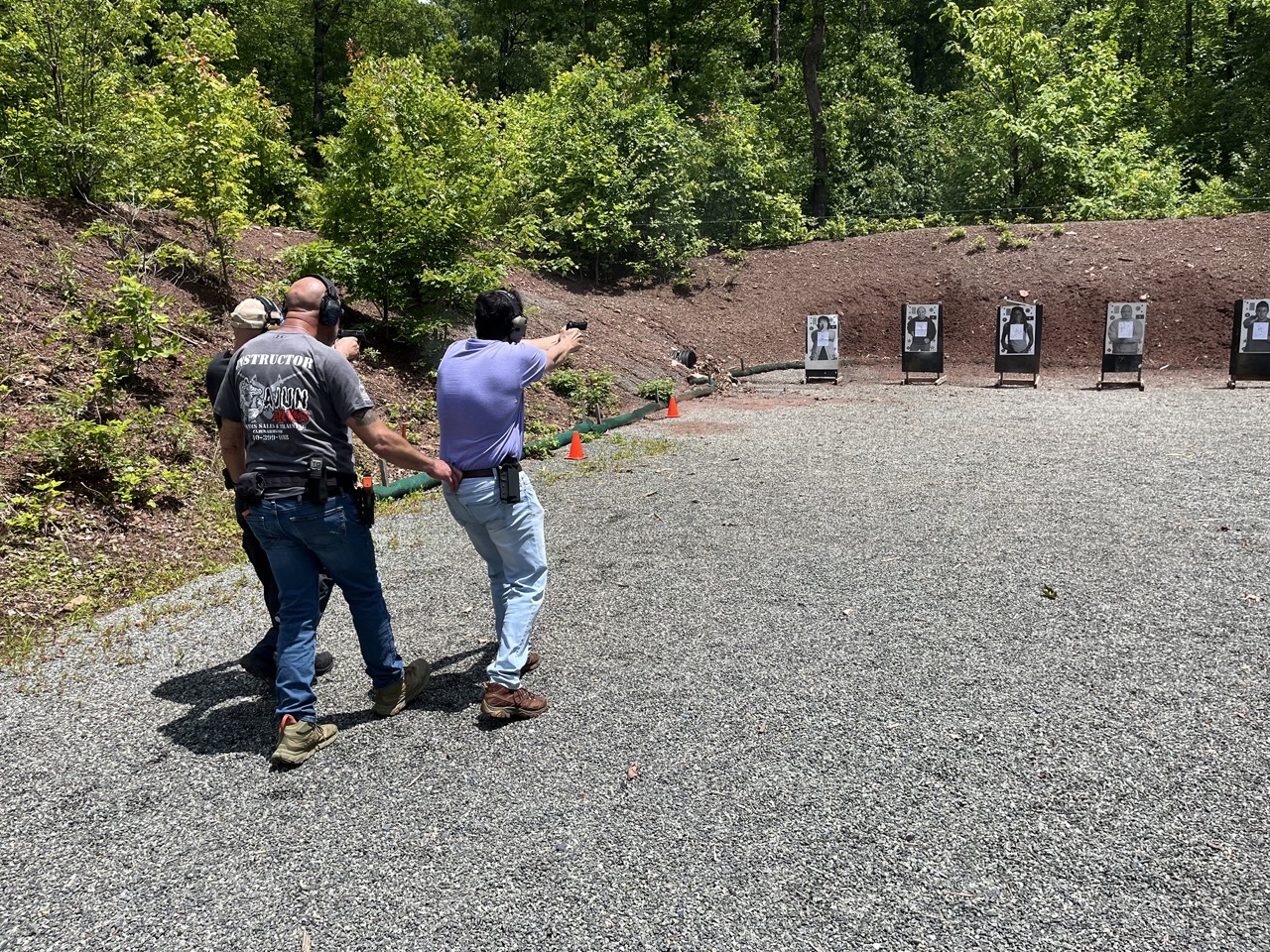
Southeastern PA premier firearms training at Cajun Arms
One of the most common questions we hear at Cajun Arms is simple—but critical:
“How often should I train with my concealed carry firearm?”
Owning a handgun and carrying it daily does not automatically make you prepared to use it under stress. Defensive pistol skills are perishable, and without structured, ongoing practice, those skills degrade far faster than most people realize.
If you carry a firearm for self-defense, your training should reflect the seriousness of that responsibility.
Why Training Frequency Matters for Concealed Carry
Most gun owners shoot occasionally—often without a plan—focusing on accuracy at a static range. While marksmanship matters, defensive shooting is not target shooting.
Real-world self-defense involves:
-
Elevated heart rate
-
Stress and fear
-
Decision-making under time pressure
-
Movement
-
Threat identification and discrimination
Without regular practice, your ability to safely draw, make hits, clear malfunctions, and think tactically will fail when you need it most.
The Minimum Training Standard for Responsible Gun Owners
At a bare minimum, concealed carriers should commit to:
Dry Fire Practice: 2–3 Times Per Week
Dry fire is one of the most effective ways to maintain and improve skills without spending ammo.
Focus on:
-
Proper grip and stance
-
A clean draw from concealment
-
Trigger control
-
Sight alignment or dot presentation
-
Safe re-holstering
Ten to fifteen minutes per session is enough—consistency matters more than duration.
Live Fire Training: At Least Once Per Month
Monthly live fire keeps you honest. It confirms that your dry fire practice is translating into real performance.
A productive live fire session should include:
-
Drawing from concealment
-
Reloads and malfunction clearing
-
Controlled pairs and failure drills
-
Shooting at realistic defensive distances
-
Shooting with purpose—not just punching holes in paper
You do not need 500 rounds. A focused session with 50–100 rounds and a plan is far more effective.
Why Classes Matter More Than Solo Range Time
Range practice maintains skills. Professional training builds them correctly in the first place.
Without instruction, many shooters unknowingly reinforce bad habits:
-
Poor grip
-
Inefficient draw strokes
-
Unsafe re-holstering
-
Fixation on bullseye accuracy instead of vital zones
At Cajun Arms, we see this often in Defensive Carry Level 1 students—and we correct it early before those habits become ingrained.
Structured training exposes you to:
-
Stress inoculation
-
Decision-making drills
-
Realistic defensive scenarios
-
Coaching and feedback you cannot get alone
👉 Internal link suggestion: Defensive Carry 1 course page
How Often Should You Take Formal Training?
For concealed carry practitioners, we recommend:
-
Foundational course (Defensive Carry 1) to establish safe, correct fundamentals
-
Follow-on training every 6–12 months to prevent skill decay
-
Progressive courses (Levels 2–4+) to expand tactical thinking and problem-solving
Only about 30% of gun owners pursue continued education beyond an entry-level class. Those who do are far more prepared to defend themselves and their loved ones.
Skill Degradation Is Real—And Predictable
Studies and real-world experience show that:
-
Fine motor skills deteriorate within weeks
-
Complex tasks fail first under stress
-
Confidence without competence is dangerous
If you haven’t trained in months—or years—you are relying on hope, not preparation.
Your firearm is life-saving equipment. You would not carry medical gear without knowing how to use it. A pistol deserves the same respect.
Build a Sustainable Concealed Carry Training Schedule
A realistic and effective training cadence looks like this:
-
Weekly: Short dry fire sessions at home
-
Monthly: Live fire range session with a plan
-
Annually: At least one professional training course
This approach keeps skills sharp without burning out time or budget.
Final Thoughts: Carrying Is a Commitment
Carrying a concealed firearm is not about feeling prepared—it’s about being prepared.
Training regularly builds:
-
Safer gun handling
-
Faster, more consistent performance
-
Better decision-making under stress
-
Confidence grounded in skill, not ego
If you’re serious about concealed carry, your training should reflect that seriousness.
- How to Build a Personal Defensive Training Plan
- Why Qualification Scores Don't Measure Defensive Readiness
- The Hidden Costs of Cheap Firearms Training
- What Experienced Concealed Carriers Wish They Knew Earlier
- What Skills Matter Most in a Defensive Encounter?
- How Often Should You Train With Your Carry Gun?
- Why Most Gun Owners Plateau After Their First Training Class
- Why Serious Shooters Across Pennsylvania Train With Cajun Arms
- Why Training Matters More Than Gear
- Mistakes Intermediate Shooters Still Make
- Dry Fire Training: What Actually Works vs. What’s a Waste of Time
- Top 10 Mistakes New Concealed Carriers Make (And How to Avoid Them)
- Why Are You Just Standing There? Shooting From Unconventional Positions
- You Get What You Pay For: Why Quality Firearms Training Matters
- How to Choose a Firearms Training Class in Pennsylvania (2026 Guide)
- Teaching Your Child Gun Safety: A Parent's Complete Guide
- AR15 for Home Defense: Choosing the Right Gun for the Job
- Understanding Self-Defense Laws and Concealed Carry in Pennsylvania: A Comprehensive Overview
- Low-Light Defensive Shooting: Techniques You Won’t Learn on the Square Range
- Defensive Mindset: How to Stay Calm and Think Under Stress
- Why De-Escalation Training Completes a Well-Rounded Defensive Education
- Self Defense Training for Your Family in Uncertain Times
- How Often Should You Train With Your Concealed Carry Firearm?
- Where to Sell Used Firearms: Why Cajun Arms is Your Premier PA Choice
- Why Training Outdoors in Winter Matters More Than You Think
- Why Most Gun Owners Fail Under Stress — And How Stress-Inoculation Training Fixes It
- Avoidance and Awareness: Your First Line of Self-Defense
- Mental Preparation for Defensive Shooting Class
- Mental Preparation for Defensive Shooting: The Missing Link for CCW Holders
- 2025/26 Trends in CCW & Concealed Carry: What Every Responsible Gun Owner Should Know
- Mastering Speed and Precision in Defensive Pistol Training: A Complete Guide
- Why Small Unit Tactics (SUT) Don’t Work for Civilians — And What Does: A Cajun Arms Guide
- What to Expect in a Defensive Pistol Class
- Essential AR15 Maintenance Tips for Maximum Reliability and Long Service Life
- Bad Guys Come Out in the Heat
- Looking for “Firearms Training Near Me”? Here’s What to Expect—and How to Choose the Right Instructor
- Speed vs. Precision: What Matters Most in a Defensive Shooting?
- Dynamic Movement & Shooting: Train Like You Fight
- Firearms Training and Home Defense
- From Basics to Advanced: Tactical Shooting Courses at Cajun Arms
- Firearms Training Near Me - Cajun Arms West Chester, PA
- Master Your AR-15 with Expert Training at Cajun Arms
- Defensive Pistol Training for Self-Defense — Cajun Arms
- Choose the Best Home Defense Firearm — Cajun Arms Guidance
- Becoming a Firearms Instructor: The Path to Excellence
- Empowerment Through Precision: Elevating Your Self-Defense Firearm Skills
- Training Scars: Breaking Free From Flat-Range Habits
- Vehicle Defense
- WATCH WHAT YOU FEED YOUR GUN
- CAN YOU BE ACCOUNTABLE FOR YOUR SPEED?
- Training with Micro-Compacts
- A Follow Up to the “Hardest Shooting Fundamental”
- So You Want To Go Fast?
- The Hardest Shooting Fundamental: Mastering Follow-Through
- New Gun, New Habits
- Home Defense Shotgun Set Up
- What Should I be Doing at the Range?
- Fighting From The Ground
- Take Charge of Recoil, don’t let it control you…
- Think Before You Speak
- Grab a Partner
- The Risks of Being Nice
- Lead With Your Eyes (not your muzzle)
- Train as You Carry… Leave the competition and tactical gear behind
- KNIFE VS GUN - A quick scenario to ponder
- Frankengun vs. Factory: Choosing a Reliable AR for Self-Defense
- Program Your Brain: Why Perfect Practice Beats Fast Practice
- What If You're Injured During a Defensive Encounter?
- Lights and Lasers and YouTube Ninjas
- Our Stance on Your Stance
- Training for More Than One Attacker…
- Keep Your Head On - Consistency
- Defensive Shotgun Accessories: What You Need—and What You Don't
- Charlottesville - lies and hypocrites
- Keep Your Finger Off the Trigger…
- …and Re-holster
- Unauthorized persons…
- Focus on What will Save Your Life
- Train for Success with your Firearms
- Every Day is a Good Day to Be Ready
- Appendix Carry - Is it right for you?
- Learn to See the Light: Low-Light Firearms Training You Can Use
- Anti-Gun Sentiment on the Internet: How It Affects Lawful Firearms Owners
- Point Shooting: Does it work?
- About your self-defense carry ammo...
- See the Whole Picture... Know how to reload reflexively
- One-Handed Shooting
- Every Bullet Has a Price
- On Magazine Changes... fighting for your life
- There is Such a Thing as Too Fast...
- A Threat at Arm's Length
- In Defensive Shooting, Missing Your Target Has Consequences...
- Operating out of your Comfort Zone...
- Every Bullet Has A Price - Operational Speed
- Car and Truck Gun Safety: Protect Yourself Responsibly
- Keep a Clear Head
- Get Training!
- Women and Firearms at Cajun Arms