Low-Light Defensive Shooting: Techniques You Won’t Learn on the Square Range
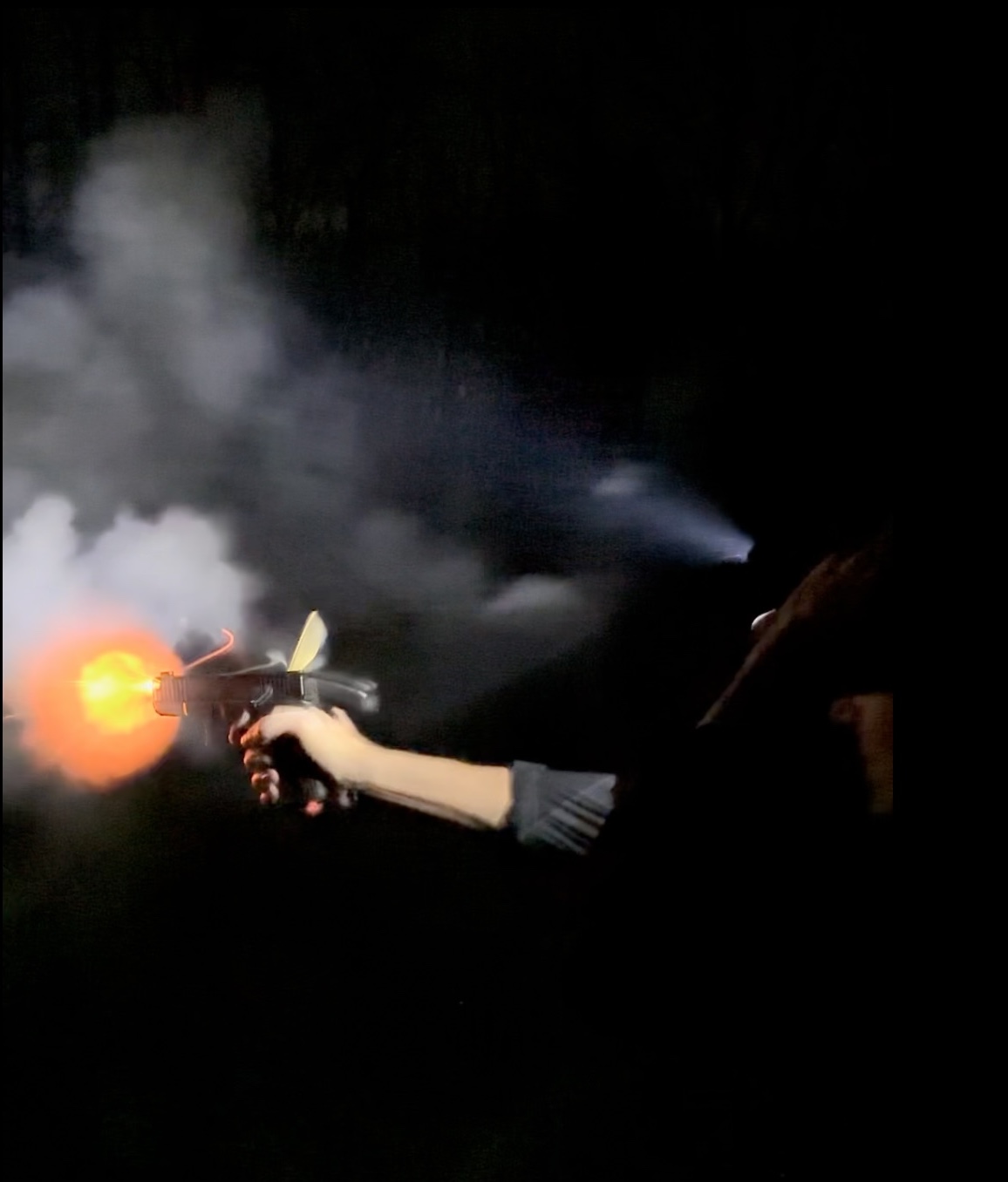
Students training low-light defensive shooting techniques at Cajun Arms in West Chester, PA
Why Low-Light Training Matters for Armed Citizens
Most real-world defensive encounters don’t happen under perfect lighting conditions. They occur at night, during early morning hours, or in poorly lit environments like parking lots, gas stations, hallways, and inside buildings. Despite this reality, many gun owners complete the majority of their training on brightly lit, flat, square ranges that fail to reflect how defensive situations actually unfold.
Low-light defensive shooting introduces challenges that fundamentally change how you perceive threats, process information, and make decisions under stress. Without dedicated low-light firearms training, even skilled shooters may struggle when visibility is limited and pressure is high.
At Cajun Arms in West Chester, PA, we believe defensive training should prepare students for real conditions—not ideal ones.
What the Square Range Doesn’t Teach You
Traditional square range training builds important fundamentals like grip, trigger control, and accuracy. However, it rarely addresses the realities of defensive encounters in reduced light, including:
-
Identifying whether a threat actually exists
-
Differentiating between threats and non-threats
-
Visual limitations caused by darkness and shadows
-
Movement and positional awareness
-
Use of cover and concealment
-
Managing uncertainty instead of known targets
On a square range, targets are clearly visible and stationary. In low-light environments, you must first find, identify, and confirm a threat before deciding to engage—often while your heart rate is elevated and your vision is compromised.
Threat Identification Comes Before Shooting
One of the most critical skills taught in low-light defensive shooting is threat identification. Shooting at shapes or movement without proper identification is both unsafe and legally catastrophic.
Low-light training forces students to slow down mentally while working faster physically. You learn to:
-
Use light to gather information, not just aim
-
Positively identify a threat before pressing the trigger
-
Avoid target fixation and visual tunnel vision
-
Manage decision-making under stress
This is a skill set that cannot be learned during daylight-only training.
Handheld Lights vs Weapon-Mounted Lights
Low-light shooting is not just about having a flashlight—it’s about knowing how and when to use it.
In structured training, students learn:
-
Advantages and limitations of handheld flashlights
-
When weapon-mounted lights are appropriate
-
Proper light activation techniques
-
Avoiding backlighting yourself
-
Searching techniques that minimize exposure
Each lighting method has trade-offs, and understanding those trade-offs is essential for defensive use.
Movement, Angles, and Cover in Low Light
Low light changes how you move. Shadows, blind spots, and limited depth perception require different positioning and pacing. In realistic defensive training, students learn to:
-
Move off the line of attack
-
Use angles to their advantage
-
Work around cover instead of standing flat-footed
-
Maintain balance and muzzle discipline in the dark
These skills are nearly impossible to develop on a static square range.
Stress, Adrenaline, and Visual Distortion
Under stress, the body reacts in predictable ways. In low-light environments, those reactions are amplified.
Training addresses:
-
Reduced visual acuity
-
Loss of fine motor skills
-
Auditory exclusion
-
Cognitive overload
Low-light defensive shooting forces students to manage stress while performing complex tasks—mirroring what happens in real defensive encounters.
Why Low-Light Training Builds a More Complete Defender
Low-light training doesn’t replace daytime fundamentals—it builds on them. It exposes weaknesses, reinforces decision-making, and strengthens situational awareness.
Students who complete low-light training consistently report:
-
Increased confidence
-
Better threat assessment skills
-
Improved safety habits
-
Stronger mental discipline under stress
This is the difference between simply knowing how to shoot and knowing how to defend yourself responsibly.
Train for Reality, Not Convenience
If your defensive training has only taken place under perfect lighting, your preparation is incomplete. Real-world encounters don’t wait for ideal conditions—and neither should your training.
At Cajun Arms, our goal is to provide realistic, thoughtful training that prepares armed citizens for the environments they are most likely to face.
- How to Build a Personal Defensive Training Plan
- Why Qualification Scores Don't Measure Defensive Readiness
- The Hidden Costs of Cheap Firearms Training
- What Experienced Concealed Carriers Wish They Knew Earlier
- What Skills Matter Most in a Defensive Encounter?
- How Often Should You Train With Your Carry Gun?
- Why Most Gun Owners Plateau After Their First Training Class
- Why Serious Shooters Across Pennsylvania Train With Cajun Arms
- Why Training Matters More Than Gear
- Mistakes Intermediate Shooters Still Make
- Dry Fire Training: What Actually Works vs. What’s a Waste of Time
- Top 10 Mistakes New Concealed Carriers Make (And How to Avoid Them)
- Why Are You Just Standing There? Shooting From Unconventional Positions
- You Get What You Pay For: Why Quality Firearms Training Matters
- How to Choose a Firearms Training Class in Pennsylvania (2026 Guide)
- Teaching Your Child Gun Safety: A Parent's Complete Guide
- AR15 for Home Defense: Choosing the Right Gun for the Job
- Understanding Self-Defense Laws and Concealed Carry in Pennsylvania: A Comprehensive Overview
- Low-Light Defensive Shooting: Techniques You Won’t Learn on the Square Range
- Defensive Mindset: How to Stay Calm and Think Under Stress
- Why De-Escalation Training Completes a Well-Rounded Defensive Education
- Self Defense Training for Your Family in Uncertain Times
- How Often Should You Train With Your Concealed Carry Firearm?
- Where to Sell Used Firearms: Why Cajun Arms is Your Premier PA Choice
- Why Training Outdoors in Winter Matters More Than You Think
- Why Most Gun Owners Fail Under Stress — And How Stress-Inoculation Training Fixes It
- Avoidance and Awareness: Your First Line of Self-Defense
- Mental Preparation for Defensive Shooting Class
- Mental Preparation for Defensive Shooting: The Missing Link for CCW Holders
- 2025/26 Trends in CCW & Concealed Carry: What Every Responsible Gun Owner Should Know
- Mastering Speed and Precision in Defensive Pistol Training: A Complete Guide
- Why Small Unit Tactics (SUT) Don’t Work for Civilians — And What Does: A Cajun Arms Guide
- What to Expect in a Defensive Pistol Class
- Essential AR15 Maintenance Tips for Maximum Reliability and Long Service Life
- Bad Guys Come Out in the Heat
- Looking for “Firearms Training Near Me”? Here’s What to Expect—and How to Choose the Right Instructor
- Speed vs. Precision: What Matters Most in a Defensive Shooting?
- Dynamic Movement & Shooting: Train Like You Fight
- Firearms Training and Home Defense
- From Basics to Advanced: Tactical Shooting Courses at Cajun Arms
- Firearms Training Near Me - Cajun Arms West Chester, PA
- Master Your AR-15 with Expert Training at Cajun Arms
- Defensive Pistol Training for Self-Defense — Cajun Arms
- Choose the Best Home Defense Firearm — Cajun Arms Guidance
- Becoming a Firearms Instructor: The Path to Excellence
- Empowerment Through Precision: Elevating Your Self-Defense Firearm Skills
- Training Scars: Breaking Free From Flat-Range Habits
- Vehicle Defense
- WATCH WHAT YOU FEED YOUR GUN
- CAN YOU BE ACCOUNTABLE FOR YOUR SPEED?
- Training with Micro-Compacts
- A Follow Up to the “Hardest Shooting Fundamental”
- So You Want To Go Fast?
- The Hardest Shooting Fundamental: Mastering Follow-Through
- New Gun, New Habits
- Home Defense Shotgun Set Up
- What Should I be Doing at the Range?
- Fighting From The Ground
- Take Charge of Recoil, don’t let it control you…
- Think Before You Speak
- Grab a Partner
- The Risks of Being Nice
- Lead With Your Eyes (not your muzzle)
- Train as You Carry… Leave the competition and tactical gear behind
- KNIFE VS GUN - A quick scenario to ponder
- Frankengun vs. Factory: Choosing a Reliable AR for Self-Defense
- Program Your Brain: Why Perfect Practice Beats Fast Practice
- What If You're Injured During a Defensive Encounter?
- Lights and Lasers and YouTube Ninjas
- Our Stance on Your Stance
- Training for More Than One Attacker…
- Keep Your Head On - Consistency
- Defensive Shotgun Accessories: What You Need—and What You Don't
- Charlottesville - lies and hypocrites
- Keep Your Finger Off the Trigger…
- …and Re-holster
- Unauthorized persons…
- Focus on What will Save Your Life
- Train for Success with your Firearms
- Every Day is a Good Day to Be Ready
- Appendix Carry - Is it right for you?
- Learn to See the Light: Low-Light Firearms Training You Can Use
- Anti-Gun Sentiment on the Internet: How It Affects Lawful Firearms Owners
- Point Shooting: Does it work?
- About your self-defense carry ammo...
- See the Whole Picture... Know how to reload reflexively
- One-Handed Shooting
- Every Bullet Has a Price
- On Magazine Changes... fighting for your life
- There is Such a Thing as Too Fast...
- A Threat at Arm's Length
- In Defensive Shooting, Missing Your Target Has Consequences...
- Operating out of your Comfort Zone...
- Every Bullet Has A Price - Operational Speed
- Car and Truck Gun Safety: Protect Yourself Responsibly
- Keep a Clear Head
- Get Training!
- Women and Firearms at Cajun Arms