Teaching Your Child Gun Safety: A Parent's Complete Guide
Teaching Your Child Gun Safety at Cajun Arms
Teaching Your Child Gun Safety: A Parent's Complete Guide
For many families in Pennsylvania, firearms are part of everyday life. Whether used for home defense, hunting, or sport shooting, responsible gun ownership includes one critical responsibility: teaching children how to safely behave around firearms.
Avoiding the topic doesn’t make kids safer. In fact, curiosity about firearms is completely natural. The safest approach is education, supervision, and responsible storage.
Parents who take the time to teach kids gun safety early help prevent accidents, reduce curiosity-driven behavior, and build lifelong respect for firearms.
This guide will walk you through age-appropriate ways to teach firearm safety, practical home rules, and when formal training may benefit your child.
Why Teaching Kids Gun Safety Matters
Many parents assume children will simply avoid firearms if told not to touch them. Unfortunately, curiosity often overrides warnings.
Education helps children:
-
Recognize firearms and understand their danger
-
Know exactly what to do if they encounter one
-
Respect firearms instead of fearing or playing with them
Children who understand the seriousness of firearms are far less likely to handle one irresponsibly.
Responsible families treat firearm safety the same way they treat other safety topics like:
-
Fire drills
-
Swimming safety
-
Traffic awareness
The goal is not to alarm children, but to prepare them with clear rules and understanding.
The Four Simple Gun Safety Rules for Kids
Children remember simple rules best. Many families start with a version of these four basic firearm safety rules:
1. Stop
If you see a gun, stop immediately.
2. Don’t Touch
Never touch a firearm unless an adult specifically says it is safe to do so.
3. Leave the Area
Create distance between yourself and the firearm.
4. Tell an Adult
Find a trusted adult immediately.
These steps are easy for young children to remember and can prevent accidents if they encounter a firearm at a friend’s house or another unfamiliar location.
When Should Kids Learn Gun Safety?
Parents often ask when they should begin teaching kids gun safety in Pennsylvania households.
The answer depends on maturity level, but many experts suggest introducing basic concepts as early as age 4–6.
At this age, children can begin learning:
-
Guns are tools, not toys
-
Only adults handle firearms
-
What to do if they find one
As children grow older, their education can expand into responsibility, safe handling, and respect for firearms.
Age-Appropriate Gun Safety Lessons
Different ages require different approaches.
Ages 4–6: Basic Awareness
Young children need simple rules and repetition.
Focus on:
-
Recognizing what a firearm looks like
-
The “Stop, Don’t Touch, Leave, Tell” rule
-
Understanding that guns are not toys
Avoid overwhelming them with technical details.
Short, simple conversations repeated regularly work best.
Ages 7–10: Building Respect
Children in this age group can begin learning more about how firearms work and why safety rules exist.
Parents may start introducing:
-
Basic parts of a firearm
-
Why muzzle direction matters
-
Why trigger discipline is important
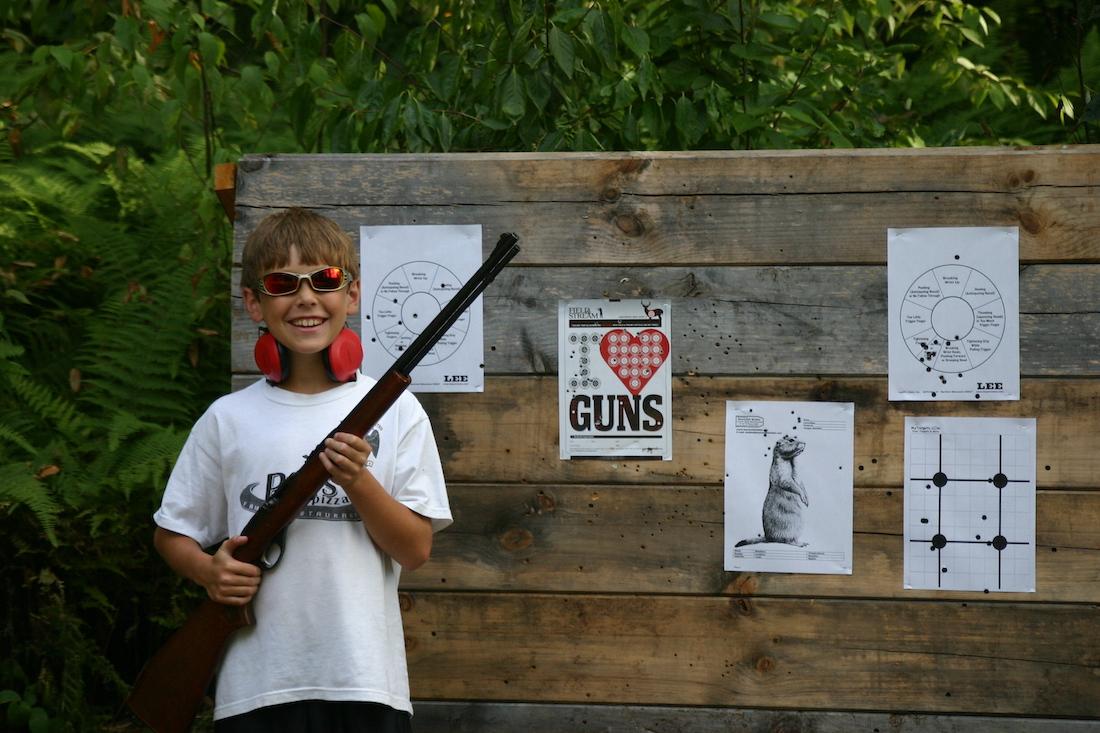
Hands-on demonstrations with unloaded firearms under strict supervision can help reinforce respect and remove mystery.
Ages 11–15: Supervised Skill Development
Older children who demonstrate maturity may begin learning safe handling skills.
Topics may include:
-
Safe firearm handling procedures
-
Range etiquette
-
Responsible decision-making
This is also a good time to introduce formal firearms safety instruction designed specifically for youth.
Structured instruction helps reinforce safety habits in a controlled environment.
Safe Gun Storage Around Children
Even well-trained children should never have unsupervised access to firearms.
Safe storage is one of the most important responsibilities for parents.
Best practices include:
Use a Gun Safe or Lockbox
Firearms should be stored in a secure safe or locked container when not in use.
Keep Guns and Ammunition Secured
Some families choose to store ammunition separately for additional security.
Use Trigger Locks When Appropriate
Trigger locks add another layer of protection when firearms are stored.
Keep Storage Locations Private
Children should not know combinations or access codes unless they are responsible teenagers under supervision.
Secure storage protects both your children and visiting friends who may not understand firearm safety.
How to Talk to Kids About Guns
Open communication is one of the most effective safety tools.
Instead of presenting firearms as mysterious or forbidden objects, treat them as serious tools that require responsibility.
Helpful tips include:
-
Encourage questions
-
Avoid fear-based messaging
-
Explain the consequences of unsafe behavior
-
Reinforce rules regularly
Children are more likely to follow safety rules when they understand why those rules exist.
What to Do Before Your Child Visits Another Home
Many accidental encounters with firearms occur at a friend’s house.
Responsible parents often ask other families about firearm storage before playdates.
You might ask questions like:
-
“Do you keep firearms in the home?”
-
“If so, are they stored locked and secured?”
These conversations may feel uncomfortable at first, but they are part of responsible parenting.
Just as you would ask about allergies, pets, or swimming pools, firearm safety should be part of the discussion.
Introducing Kids to Shooting Sports
When children are ready, supervised shooting activities can be a positive way to reinforce safety and discipline.
Benefits include:
-
Building respect for firearms
-
Learning responsibility
-
Developing focus and patience
Many families enjoy activities such as:
-
Target shooting
-
Youth shooting leagues
-
Hunting traditions
Structured environments with professional supervision are often the safest way to introduce these skills.
Consider Professional Youth Firearms Training
While parents play the most important role in teaching safety, professional instruction can reinforce those lessons.
Youth firearm safety classes typically include:
-
Age-appropriate safety instruction
-
Safe handling skills
-
Range etiquette
-
Supervised shooting experience
Professional instructors also help ensure that safety habits are learned correctly from the beginning.
Firearm Safety Is a Family Responsibility
Teaching kids gun safety isn’t a one-time conversation.
It’s an ongoing process that includes:
-
Regular discussions
-
Safe storage practices
-
Responsible role modeling
-
Structured training when appropriate
Children learn by watching the adults around them. Parents who consistently demonstrate safe firearm behavior create the strongest safety culture at home.
Family Firearms Training in West Chester, Pennsylvania
At Cajun Arms in West Chester, PA, we believe responsible firearm ownership begins with education.
Our programs help families build a strong foundation in firearm safety and responsible gun handling.
Youth Firearms Programs
Our youth-focused instruction introduces children to firearms in a safe, structured, and age-appropriate environment.
👉 Learn more about youth firearms training programs
Family Firearms Classes
Families who train together build shared safety habits and confidence.
👉 Explore our family firearms safety classes
Questions About Teaching Kids Gun Safety?
If you're a parent looking for guidance on teaching kids gun safety in Pennsylvania, our instructors are happy to help.
👉 Contact Cajun Arms today to learn more about youth and family training opportunities.
Responsible firearm ownership begins with education, awareness, and preparation — and it starts at home.
- How to Build a Personal Defensive Training Plan
- Why Qualification Scores Don't Measure Defensive Readiness
- The Hidden Costs of Cheap Firearms Training
- What Experienced Concealed Carriers Wish They Knew Earlier
- What Skills Matter Most in a Defensive Encounter?
- How Often Should You Train With Your Carry Gun?
- Why Most Gun Owners Plateau After Their First Training Class
- Why Serious Shooters Across Pennsylvania Train With Cajun Arms
- Why Training Matters More Than Gear
- Mistakes Intermediate Shooters Still Make
- Dry Fire Training: What Actually Works vs. What’s a Waste of Time
- Top 10 Mistakes New Concealed Carriers Make (And How to Avoid Them)
- Why Are You Just Standing There? Shooting From Unconventional Positions
- You Get What You Pay For: Why Quality Firearms Training Matters
- How to Choose a Firearms Training Class in Pennsylvania (2026 Guide)
- Teaching Your Child Gun Safety: A Parent's Complete Guide
- AR15 for Home Defense: Choosing the Right Gun for the Job
- Understanding Self-Defense Laws and Concealed Carry in Pennsylvania: A Comprehensive Overview
- Low-Light Defensive Shooting: Techniques You Won’t Learn on the Square Range
- Defensive Mindset: How to Stay Calm and Think Under Stress
- Why De-Escalation Training Completes a Well-Rounded Defensive Education
- Self Defense Training for Your Family in Uncertain Times
- How Often Should You Train With Your Concealed Carry Firearm?
- Where to Sell Used Firearms: Why Cajun Arms is Your Premier PA Choice
- Why Training Outdoors in Winter Matters More Than You Think
- Why Most Gun Owners Fail Under Stress — And How Stress-Inoculation Training Fixes It
- Avoidance and Awareness: Your First Line of Self-Defense
- Mental Preparation for Defensive Shooting Class
- Mental Preparation for Defensive Shooting: The Missing Link for CCW Holders
- 2025/26 Trends in CCW & Concealed Carry: What Every Responsible Gun Owner Should Know
- Mastering Speed and Precision in Defensive Pistol Training: A Complete Guide
- Why Small Unit Tactics (SUT) Don’t Work for Civilians — And What Does: A Cajun Arms Guide
- What to Expect in a Defensive Pistol Class
- Essential AR15 Maintenance Tips for Maximum Reliability and Long Service Life
- Bad Guys Come Out in the Heat
- Looking for “Firearms Training Near Me”? Here’s What to Expect—and How to Choose the Right Instructor
- Speed vs. Precision: What Matters Most in a Defensive Shooting?
- Dynamic Movement & Shooting: Train Like You Fight
- Firearms Training and Home Defense
- From Basics to Advanced: Tactical Shooting Courses at Cajun Arms
- Firearms Training Near Me - Cajun Arms West Chester, PA
- Master Your AR-15 with Expert Training at Cajun Arms
- Defensive Pistol Training for Self-Defense — Cajun Arms
- Choose the Best Home Defense Firearm — Cajun Arms Guidance
- Becoming a Firearms Instructor: The Path to Excellence
- Empowerment Through Precision: Elevating Your Self-Defense Firearm Skills
- Training Scars: Breaking Free From Flat-Range Habits
- Vehicle Defense
- WATCH WHAT YOU FEED YOUR GUN
- CAN YOU BE ACCOUNTABLE FOR YOUR SPEED?
- Training with Micro-Compacts
- A Follow Up to the “Hardest Shooting Fundamental”
- So You Want To Go Fast?
- The Hardest Shooting Fundamental: Mastering Follow-Through
- New Gun, New Habits
- Home Defense Shotgun Set Up
- What Should I be Doing at the Range?
- Fighting From The Ground
- Take Charge of Recoil, don’t let it control you…
- Think Before You Speak
- Grab a Partner
- The Risks of Being Nice
- Lead With Your Eyes (not your muzzle)
- Train as You Carry… Leave the competition and tactical gear behind
- KNIFE VS GUN - A quick scenario to ponder
- Frankengun vs. Factory: Choosing a Reliable AR for Self-Defense
- Program Your Brain: Why Perfect Practice Beats Fast Practice
- What If You're Injured During a Defensive Encounter?
- Lights and Lasers and YouTube Ninjas
- Our Stance on Your Stance
- Training for More Than One Attacker…
- Keep Your Head On - Consistency
- Defensive Shotgun Accessories: What You Need—and What You Don't
- Charlottesville - lies and hypocrites
- Keep Your Finger Off the Trigger…
- …and Re-holster
- Unauthorized persons…
- Focus on What will Save Your Life
- Train for Success with your Firearms
- Every Day is a Good Day to Be Ready
- Appendix Carry - Is it right for you?
- Learn to See the Light: Low-Light Firearms Training You Can Use
- Anti-Gun Sentiment on the Internet: How It Affects Lawful Firearms Owners
- Point Shooting: Does it work?
- About your self-defense carry ammo...
- See the Whole Picture... Know how to reload reflexively
- One-Handed Shooting
- Every Bullet Has a Price
- On Magazine Changes... fighting for your life
- There is Such a Thing as Too Fast...
- A Threat at Arm's Length
- In Defensive Shooting, Missing Your Target Has Consequences...
- Operating out of your Comfort Zone...
- Every Bullet Has A Price - Operational Speed
- Car and Truck Gun Safety: Protect Yourself Responsibly
- Keep a Clear Head
- Get Training!
- Women and Firearms at Cajun Arms