Mistakes Intermediate Shooters Still Make
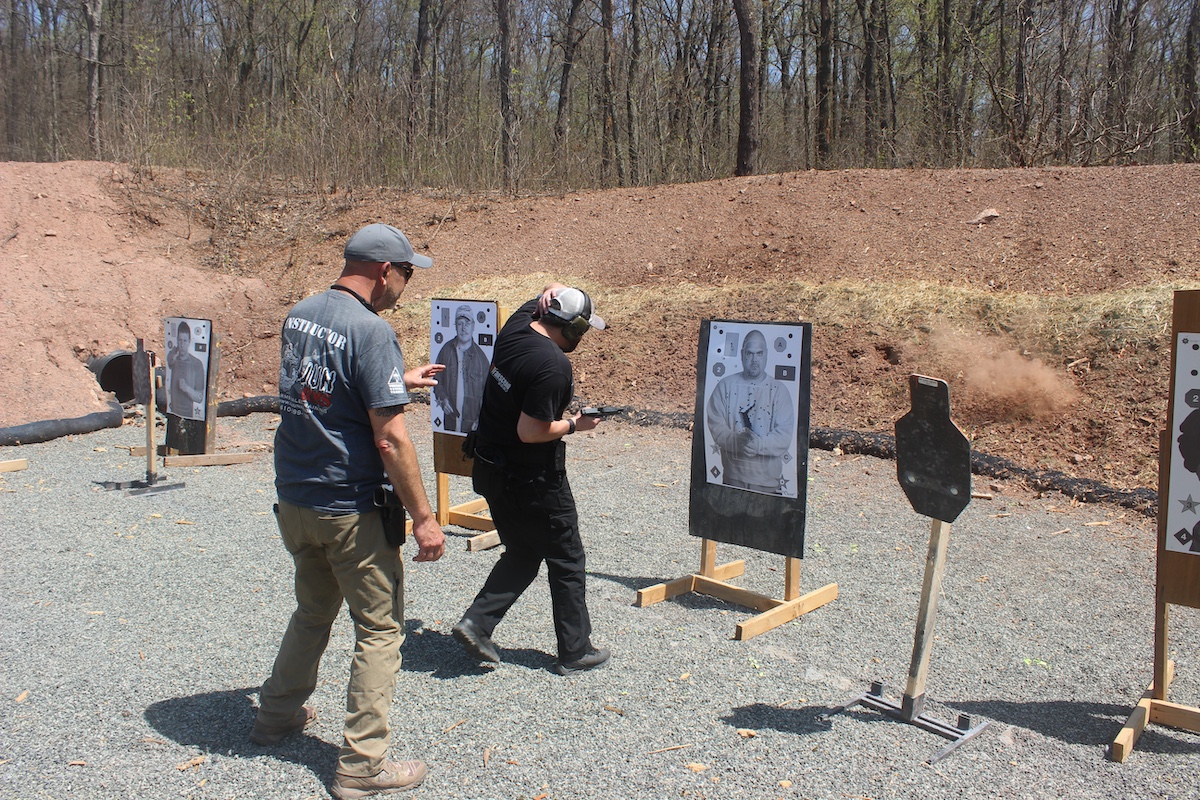
Cajun Arms instrcutor coaching student with close contact
Most shooters eventually move beyond the beginner stage. They become comfortable with their firearm, understand safety fundamentals, and can perform reasonably well on a square range.
That’s where a different problem starts.
Intermediate shooters often plateau—not because they lack ability, but because they begin reinforcing habits that limit further growth. At Cajun Arms, we regularly see shooters who have enough experience to feel confident, but still struggle when pressure, movement, or accountability are introduced.
The reality is this: intermediate-level mistakes are often harder to fix than beginner mistakes because they’ve been repeated for years.
If you’re serious about becoming more capable with a firearm, these are the habits worth addressing.
1. Chasing Speed Instead of Efficiency
One of the biggest mistakes intermediate shooters make is prioritizing speed before consistency.
This often shows up as:
- Sloppy draws
- Poor sight accountability
- Missed shots during transitions
- Racing the trigger
Searches for “how to shoot faster accurately” are everywhere—but most people approach it backwards.
What actually works:
Efficiency creates speed naturally.
Focus on:
- Clean mechanics
- Predictable movement
- Visual patience
The fastest shooters are rarely “rushing.” They’re eliminating unnecessary motion.
2. Training Only on Static Flat Ranges
A common issue with intermediate shooters is becoming overly comfortable in controlled environments.
Standing motionless at a fixed distance creates artificial confidence.
The problem appears when shooters must:
- Move
- Think
- Process information
- Shoot under pressure
Real defensive shooting is rarely static.
What actually works:
Incorporate:
- Movement
- Positional shooting
- Timed drills
- Decision-making exercises
Skill must exist outside ideal conditions.
3. Ignoring the Fundamentals Because They’re “Past That”
Intermediate shooters often stop revisiting fundamentals because they believe they’ve already mastered them.
In reality, high-level shooters obsess over fundamentals.
Grip, trigger control, vision, and recoil management are not beginner concepts—they are lifetime concepts.
What actually works:
Regularly revisit:
- Grip pressure consistency
- Trigger prep
- Sight tracking
- Drawstroke efficiency
Most performance problems trace back to degraded fundamentals.
4. Mistaking Round Count for Progress
One of the most searched questions online is “how often should you practice shooting.”
The answer is not simply “more.”
Burning through ammunition without structure often reinforces poor habits.
Intermediate shooters commonly:
- Shoot too quickly
- Lack specific goals
- Fail to evaluate performance
What actually works:
Train with intent:
- Focus on one or two objectives per session
- Track performance honestly
- Stop practicing once quality declines
Purpose matters more than volume.
5. Avoiding Pressure-Based Training
Many shooters look competent until a timer, movement, or accountability enters the equation.
Then mechanics break down.
This is one of the clearest differences between recreational shooting and defensive training.
What actually works:
Introduce manageable stress:
- Timers
- Performance standards
- Movement
- Cognitive processing
Pressure exposes inefficiency. That’s valuable.
6. Overreliance on Gear Instead of Skill
Intermediate shooters often begin chasing equipment upgrades instead of improving capability.
Searches for:
- “best red dot for concealed carry”
- “best pistol upgrades”
- “best competition trigger”
are everywhere.
Quality gear matters—but it does not replace performance.
What actually works:
Use gear that:
- Is reliable
- Supports your mission
- Allows consistency
Skill matters more than accessories.
7. Consuming Too Much Online Content Without Context
There is no shortage of firearms content online. Some of it is excellent. Much of it lacks context.
Intermediate shooters often:
- Bounce between techniques
- Copy advanced methods prematurely
- Build inconsistent habits from conflicting advice
Watching content is not the same as structured learning.
What actually works:
Find proven instruction and apply it consistently long enough to evaluate results.
Constantly changing methods prevents real progression.
8. Neglecting Dry Fire Training
A surprising number of intermediate shooters still rely almost entirely on live fire.
The issue is that live fire often masks inefficiency because recoil and noise distract from mechanics.
Dry fire exposes everything:
- Poor trigger control
- Inconsistent draws
- Visual tracking issues
- Unnecessary movement
What actually works:
Structured dry fire sessions focused on:
- Drawstroke
- Trigger control
- Target transitions
- Movement efficiency
Done correctly, dry fire accelerates improvement dramatically.
9. Training for the Range Instead of the Real World
Many shooters unknowingly train to perform well on a flat range instead of preparing for defensive realities.
That distinction matters.
Real-world conditions involve:
- Adrenaline
- Unpredictability
- Imperfect positioning
- Time pressure
Being a good range shooter and being prepared are not automatically the same thing.
What actually works:
Train with realism and accountability—not fantasy scenarios or theatrics.
10. Believing Experience Automatically Equals Competence
Time around firearms does not guarantee proficiency.
Years of repetition can either:
- Build capability
or - Cement inefficiency permanently
The best shooters maintain a mindset of continual refinement.
What actually works:
Stay coachable. Stay analytical. Continue pressure-testing your skills honestly.
That mindset separates progression from stagnation.
Final Thoughts: The Plateau Is Real—But It’s Fixable
Intermediate shooters are often closer to meaningful improvement than they realize.
Usually, the issue is not effort. It’s direction.
At Cajun Arms, we focus on helping shooters move beyond static range habits and develop skills that hold together under pressure, movement, and accountability.
Because true capability is built through deliberate practice—not just repetition.
Train With Purpose
If you’re ready to move past the plateau and identify the habits limiting your performance, our training programs are designed to challenge shooters beyond the basics in a structured, safety-focused environment.
Real improvement starts when comfort ends.
- How to Build a Personal Defensive Training Plan
- Why Qualification Scores Don't Measure Defensive Readiness
- The Hidden Costs of Cheap Firearms Training
- What Experienced Concealed Carriers Wish They Knew Earlier
- What Skills Matter Most in a Defensive Encounter?
- How Often Should You Train With Your Carry Gun?
- Why Most Gun Owners Plateau After Their First Training Class
- Why Serious Shooters Across Pennsylvania Train With Cajun Arms
- Why Training Matters More Than Gear
- Mistakes Intermediate Shooters Still Make
- Dry Fire Training: What Actually Works vs. What’s a Waste of Time
- Top 10 Mistakes New Concealed Carriers Make (And How to Avoid Them)
- Why Are You Just Standing There? Shooting From Unconventional Positions
- You Get What You Pay For: Why Quality Firearms Training Matters
- How to Choose a Firearms Training Class in Pennsylvania (2026 Guide)
- Teaching Your Child Gun Safety: A Parent's Complete Guide
- AR15 for Home Defense: Choosing the Right Gun for the Job
- Understanding Self-Defense Laws and Concealed Carry in Pennsylvania: A Comprehensive Overview
- Low-Light Defensive Shooting: Techniques You Won’t Learn on the Square Range
- Defensive Mindset: How to Stay Calm and Think Under Stress
- Why De-Escalation Training Completes a Well-Rounded Defensive Education
- Self Defense Training for Your Family in Uncertain Times
- How Often Should You Train With Your Concealed Carry Firearm?
- Where to Sell Used Firearms: Why Cajun Arms is Your Premier PA Choice
- Why Training Outdoors in Winter Matters More Than You Think
- Why Most Gun Owners Fail Under Stress — And How Stress-Inoculation Training Fixes It
- Avoidance and Awareness: Your First Line of Self-Defense
- Mental Preparation for Defensive Shooting Class
- Mental Preparation for Defensive Shooting: The Missing Link for CCW Holders
- 2025/26 Trends in CCW & Concealed Carry: What Every Responsible Gun Owner Should Know
- Mastering Speed and Precision in Defensive Pistol Training: A Complete Guide
- Why Small Unit Tactics (SUT) Don’t Work for Civilians — And What Does: A Cajun Arms Guide
- What to Expect in a Defensive Pistol Class
- Essential AR15 Maintenance Tips for Maximum Reliability and Long Service Life
- Bad Guys Come Out in the Heat
- Looking for “Firearms Training Near Me”? Here’s What to Expect—and How to Choose the Right Instructor
- Speed vs. Precision: What Matters Most in a Defensive Shooting?
- Dynamic Movement & Shooting: Train Like You Fight
- Firearms Training and Home Defense
- From Basics to Advanced: Tactical Shooting Courses at Cajun Arms
- Firearms Training Near Me - Cajun Arms West Chester, PA
- Master Your AR-15 with Expert Training at Cajun Arms
- Defensive Pistol Training for Self-Defense — Cajun Arms
- Choose the Best Home Defense Firearm — Cajun Arms Guidance
- Becoming a Firearms Instructor: The Path to Excellence
- Empowerment Through Precision: Elevating Your Self-Defense Firearm Skills
- Training Scars: Breaking Free From Flat-Range Habits
- Vehicle Defense
- WATCH WHAT YOU FEED YOUR GUN
- CAN YOU BE ACCOUNTABLE FOR YOUR SPEED?
- Training with Micro-Compacts
- A Follow Up to the “Hardest Shooting Fundamental”
- So You Want To Go Fast?
- The Hardest Shooting Fundamental: Mastering Follow-Through
- New Gun, New Habits
- Home Defense Shotgun Set Up
- What Should I be Doing at the Range?
- Fighting From The Ground
- Take Charge of Recoil, don’t let it control you…
- Think Before You Speak
- Grab a Partner
- The Risks of Being Nice
- Lead With Your Eyes (not your muzzle)
- Train as You Carry… Leave the competition and tactical gear behind
- KNIFE VS GUN - A quick scenario to ponder
- Frankengun vs. Factory: Choosing a Reliable AR for Self-Defense
- Program Your Brain: Why Perfect Practice Beats Fast Practice
- What If You're Injured During a Defensive Encounter?
- Lights and Lasers and YouTube Ninjas
- Our Stance on Your Stance
- Training for More Than One Attacker…
- Keep Your Head On - Consistency
- Defensive Shotgun Accessories: What You Need—and What You Don't
- Charlottesville - lies and hypocrites
- Keep Your Finger Off the Trigger…
- …and Re-holster
- Unauthorized persons…
- Focus on What will Save Your Life
- Train for Success with your Firearms
- Every Day is a Good Day to Be Ready
- Appendix Carry - Is it right for you?
- Learn to See the Light: Low-Light Firearms Training You Can Use
- Anti-Gun Sentiment on the Internet: How It Affects Lawful Firearms Owners
- Point Shooting: Does it work?
- About your self-defense carry ammo...
- See the Whole Picture... Know how to reload reflexively
- One-Handed Shooting
- Every Bullet Has a Price
- On Magazine Changes... fighting for your life
- There is Such a Thing as Too Fast...
- A Threat at Arm's Length
- In Defensive Shooting, Missing Your Target Has Consequences...
- Operating out of your Comfort Zone...
- Every Bullet Has A Price - Operational Speed
- Car and Truck Gun Safety: Protect Yourself Responsibly
- Keep a Clear Head
- Get Training!
- Women and Firearms at Cajun Arms